Battling Rhino Poaching to Protect the Last Giants and Preserve Our Natural Heritage
These magnificent animals are in danger due to rhino poaching, an illicit activity that has plagued the continent for decades.
Brutal rhino poaching methods have escalated in South Africa, which is currently home to about 70 percent of the remaining rhinos in the world.
The need to expose the unlawful commerce that fuels rhino poaching is vital because only by comprehending the magnitude and complexity of this problem can we take effective action.
Warning!
We report here on the brutal methods used by these poachers and warn wildlife lovers that some of the rhino poaching pictures displayed here are very graphic.
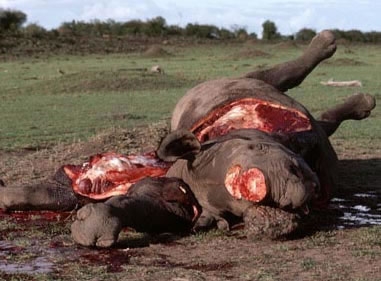
Rhino horns are exceedingly valuable on the illicit market.
Prices between $30,000 and $65,000 per kg in Vietnam (worth more than gold, heroin, or cocaine) make it a lucrative underground business.
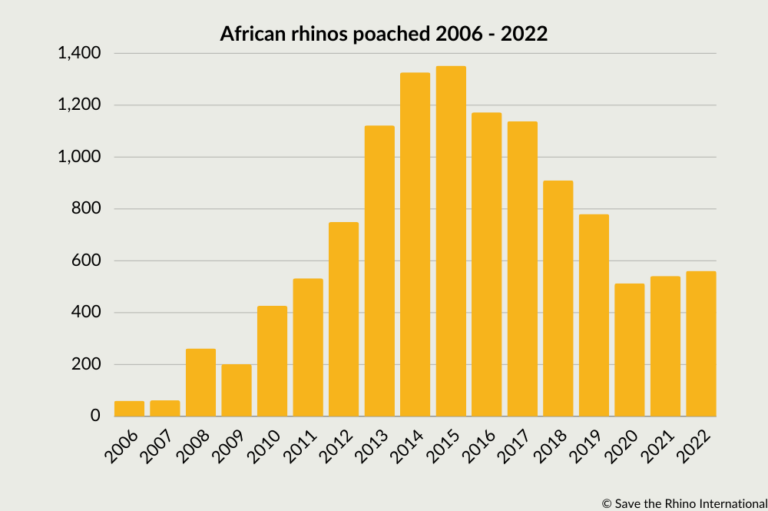
Facts about rhino poaching: Why the hell people pay $300,000 for rhino horn.
Generally,because off some ridiculous myths.
During the days of colonialism, exploiting the natural resources of Africa was the leading cause of rhino deaths in the form of unconstrained hunting.
Rhino hunting was considered a leisure activity. The rhino horn was kept as a trophy.
However, during the last few years, rhino horns have been used as a symbol of wealth.
Today, rhino horn powder is seen as a cocaine-like party drug in Vietnam.
Reasons for rhino poaching
Demand from China and Vietnam has elevated the price of rhino horns to new levels.
There have been reports that rhino horn has been fetching prices as high as $50,000 per kg.
This is like the street price for cocaine in the UK.
This demand has resulted in a big surge in the number of rhino poaching incidents.
Ground horn is used in established Asian medicine as an assumed cure for a range of illnesses, from hangovers to cancer.
Along with its use in medicine, rhino horn is purchased and consumed purely as a symbol of wealth.
A story that started in Vietnam a few years ago, that rhino horn had cured cancer in a former politician spread rapidly.
The result of this unfounded, ridiculous story: demand for rhino horn surged, hitting a record high of more than $60,000 a kilogram.
Why are rhinos such easy targets for poachers?
Rhinos have extremely poor eyesight, and they cannot see stationary objects even just a few meters away from them.
Their hearing is however very acute, and they also have their well-developed sense of smell to warn them of approaching danger.
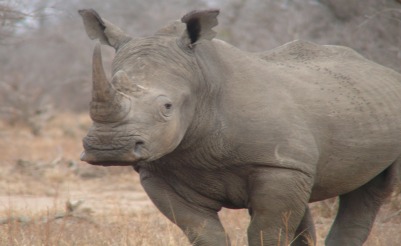
At the lower end of the spectrum of poachers, you find subsistence poachers.
They are usually from poor communities are driven by poverty and hunger.
Poor rhino eyesight
Their poor eyesight leaves rhinos very vulnerable against experienced poachers who can approach them within a few meters before opening fire.
Subsistence poachers are usually on foot and will shoot the rhino with random fire to the head and chest area, as well as the legs, to immobilize the animal.
They will then remove the horns very roughly using an axe.
These poachers take elevated risks for comparatively little reward.
They will usually pass the horns to a syndicate member after the job is done.
Black rhinos leave characteristic three-toed prints and follow consistent routes, making them easy to track.
Black rhinoceroses belong to the order of odd-toed ungulates. They have three toes, which make their tracks easy to identify.
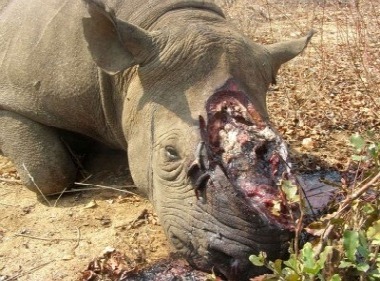
The procedures are as barbarous as they are effective. Poachers, both desperate villagers and well-skilled professionals, use a variety of tools, including:
- Tranquilizer darts fired from helicopters A silent but devastating onslaught.
- Chainsaws are used to slice off horns, a cruel act perpetrated on often-living creatures.
- Veterinary drugs: misused by someone with insider information, resulting in excruciating deaths.
Poaching professionals
Many of the poachers seem to have had military training.
They will normally have prior access to information about the farm they intend to target.
These professional poachers are driven by a desire for financial gain and sheer greed.
This group sometimes involves experienced criminal gangs that are part of a more organized and structured group.
Some of the indicators that skilled professional hunters are also involved.
One tell-tale sign is the fact that in some cases it is clear that the rhinos have been felled with one single well-placed shot to the head or body.
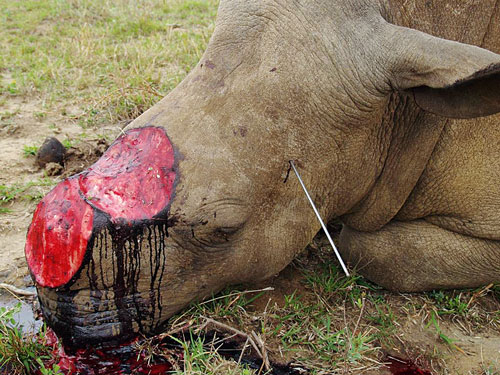
The high-tech aerial attack will be done by darting the animal from the air with tranquilizer guns.
This will
takes less than seven minutes to bring down the animal.
Vets involved?
The fact that highly controlled and regulated veterinary drugs are used in certain cases of rhino poaching indicates the involvement of professional veterinarians.
When they land the helicopter, they hack off the horns with a chainsaw.
The use of a helicopter allows for easy access and quick getaways.
Several media reports have indicated that the registration numbers on the tail of the aircraft get covered up or falsified during the operation.
The rhino subsequently dies either from an overdose of tranquilizer or bleeds to death.
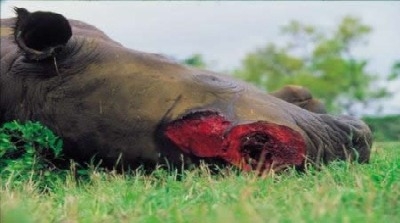
One troubling fact is that the methods being used by the syndicates often reflect those used by wildlife capture operators in professional rhino management operations.
The rhinos are normally darted with a dosage of lethal drugs that may result in a quick death, although some evidence shows that the animal suffered great stress before death.
If the drug dosage had been too low to kill the rhino the animal is likely to wake during the brutal removal of the horns with a chainsaw.
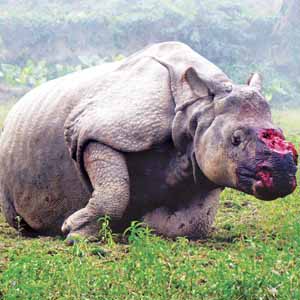 Poachers use chainsaws to rip rhinos' horns off often leaving the rhino are still alive.
The severely maimed rhino will then attempt to breathe through a cavity in its nasal passage between its eyes.
This rhino will have no sense of smell and if it survives will have a great battle to fight off any secondary infection.
Wildlife industry insiders' part of the problem?
Increasing evidence links South Africa's rhino poaching with wildlife industry insiders.
These individuals are obviously in a great position to run wildlife crime syndicates and are typically also well funded and connected within the industry.
There are also rumors that rhino poaching syndicates are penetrating the hunting industry.
The hunting industry has access to guns, permits, vehicles and charter aircraft making them a target for rhino poaching syndicates.
These rumors seem to have merit because of the increasing number of arrests of -
- game ranchers,
- safari operators
and
- professional hunters.
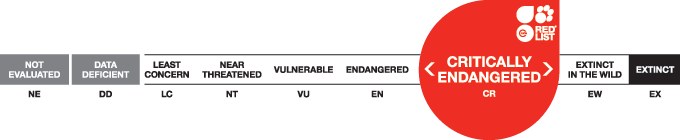
Rhino conservation status
How to stop rhino poaching?
Unfortunately, there is no simple and obvious solution to this problem.
There is currently numerous proposals in the pipeline and some heated debates around opinions which include the following:
- Strong differences of opinion between people calling for legalized trade in rhino horn (to turn it into a commodity) and those against it.
- Addressing the issue of educating the end-user in Asia
- To establish a database of all rhino horn DNA samples.
Our generation is not supposed to see our beautiful African animals looking like this:
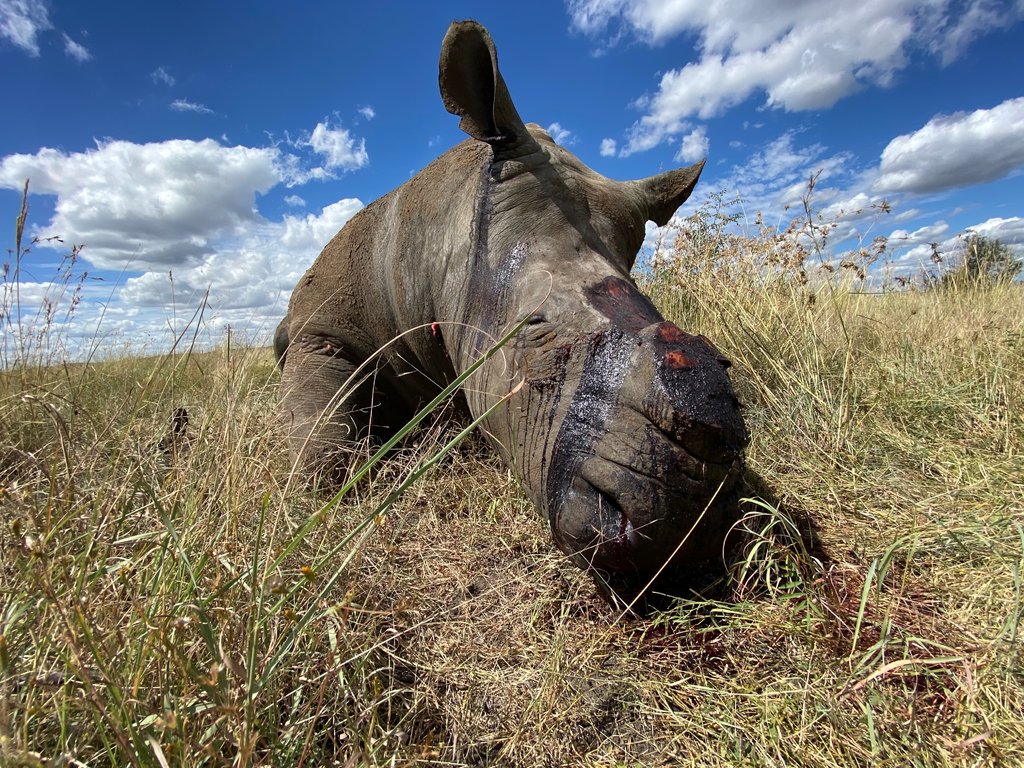 Image credit: Nico Jacobs
Funds are seriously needed to secure the safety of rhinos.
Financial support will contribute towards critically required for rhino protection projects in Africa.
When will our rhinos become extinct?
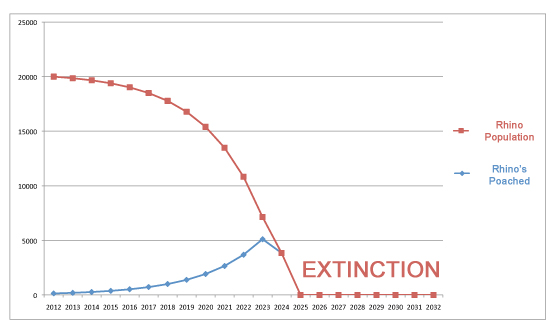
Graph credit: rhinosurvival.org
Stopping the illegal trade that is causing the slaughter of these majestic animals
The sheer extent of the challenge and the cruelty of what we are up against is overwhelming, but we must not give up without a fight.
Due to human greed, the existence of these magnificent giants is in jeopardy, and they are on the verge of extinction.
Hopefully, more heroes will rise in the fight against rhino poaching to protect our natural heritage and the fragile ecosystem.
Rhinos have survived the ice age and rampant hunting eras of the past.
The question now is - how will they survive us?
Like this page?
Looking for a solution to rhino poaching
We discuss our thinking about the solutions to rhino poaching here.
Wildlife home
 |
Wildlife conservation
 |