Unveiling Hippopotamus' Fascinating World
From Giant Bathers to River Guards
Welcome to the fascinating world of the hippopotamus, where huge swimmers and river guardians reign supreme.
With their huge mass, these elegant creatures have captured the interest of naturalists and animal lovers alike. This article dives into the fascinating world of hippos, revealing their extraordinary qualities, behaviors, and ecological value.
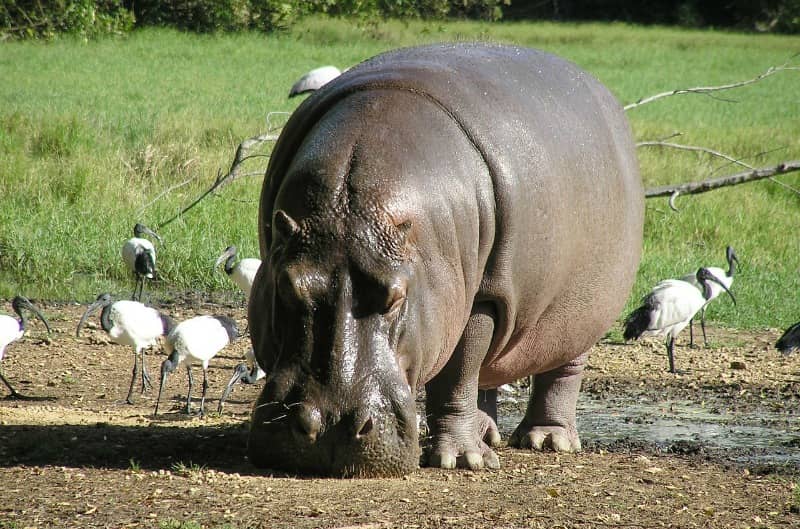 Hippopotami have an unmistakable shape and size
Hippopotamuses are the third-largest land mammal species on our planet, after elephants and white rhinos.
They are not highly active during the day, but some will occasionally
play, and some bulls will take some time out for a good fight with a potential competitor.
Let's have a look at some of their interesting habits.
How dangerous are hippos?
The hippopotamus has the reputation of being the most dangerous wild mammal in Africa.
Based On human fatalities, this reputation is well deserved.
Hippos are fiercely territorial and well-equipped to do great damage to anything that enters their domain.
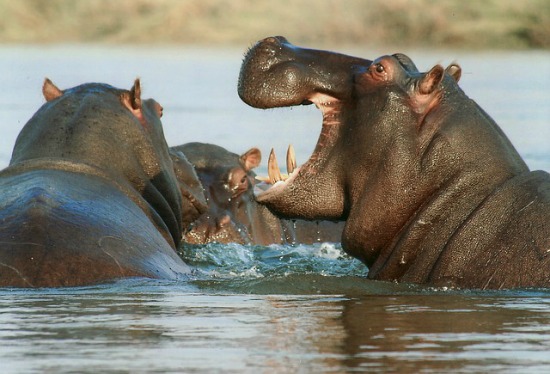 Hippos are fiercely territorial.
Something that must be remembered is that unlike most land animals, usually have many escape options; these animals have a small area to escape to in their "water homes".
If they get frightened on land, they charge back to the safety of water and trample anything that comes in its way.
The plural of hippopotamus is hippopotamuses.
On land, a hippopotamus can reach a top speed of thirty kilometers per hour, and they are surprisingly agile.
To get between this animal and water is to risk being trampled as it tries to get to safety.
Yawning displays are a dominance signal and a clear signal for intruders, including you, to stay away.
How long is a Hippopotamus?
They can grow between 10 and 16 feet (3.3 to 5 meters) long and up to 5.2 feet (1.6 meters) tall at their shoulder height.
They are the third-largest living land mammal in Africa, after elephants and white rhinos.
Hippo skin is dark grey and smooth, pink around the eyes and lips and in the skin folds.
The head is large with a broad mouth in which the upper and lower canine teeth and incisors are enlarged into tusks.
The eyes and ears are small and set far back on the head.
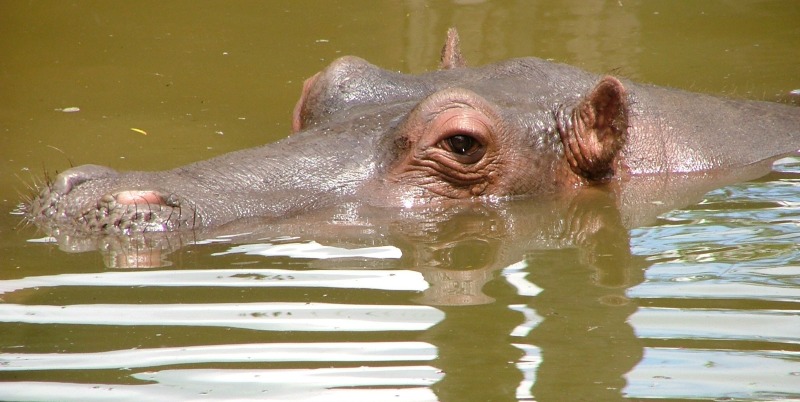 Hippo eyes and ears are small and set far back on the head
The plump and bulky body is set on short, stumpy legs.
The neck is short and thick, and the skin here is heavy with folds.
How fast is a hippo?
You could assume that "they must be fat and slow" based on their hippos' anatomy.
They can sprint nineteen miles in nineteen hours, or 30 km/h, on land.
Therefore, to believe that you can outrun the third-largest land mammal on Earth would be a grave mistake.
You and I can sprint at a top speed of 24 km/h on average.
What are Hippos sweat?
They suffer from sunburn, which cracks their skin.
One of the strangest possible sights you will see on an African Safari is that an overheated hippo looks as if it is sweating blood.
These are mucus glands in their skin that contain a red pigment. This mucus acts as an amazingly effective sunscreen.
Within a few minutes of perspiration, the hippopotamus' colorless, thick sweat gradually turns red.
Although the fluid secreted by the hippopotamus is not truly sweat because it is produced by subdermal glands, it operates similarly to sweat in aiding in body temperature regulation.
It is also known to have antiseptic properties.
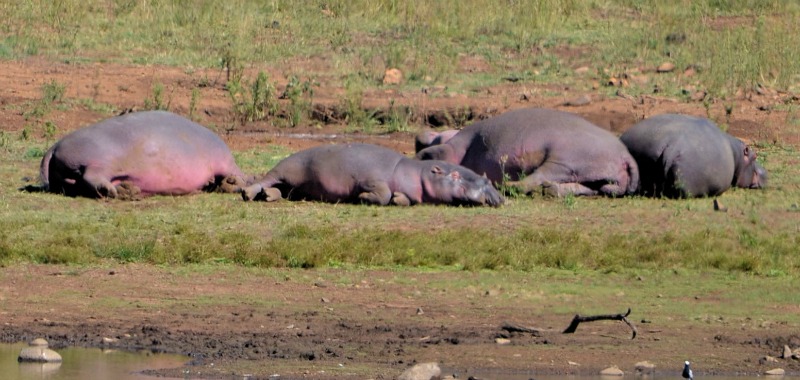 When a hippo stays in the sun too long it looks as if it is sweating blood.
If you do your African safari on overcast, cool days in summer or on warm, sunny days in winter, you are highly likely to see them sunning themselves on riverbanks.
You are likely to see them wallowing in mud holes only when there is no water available.
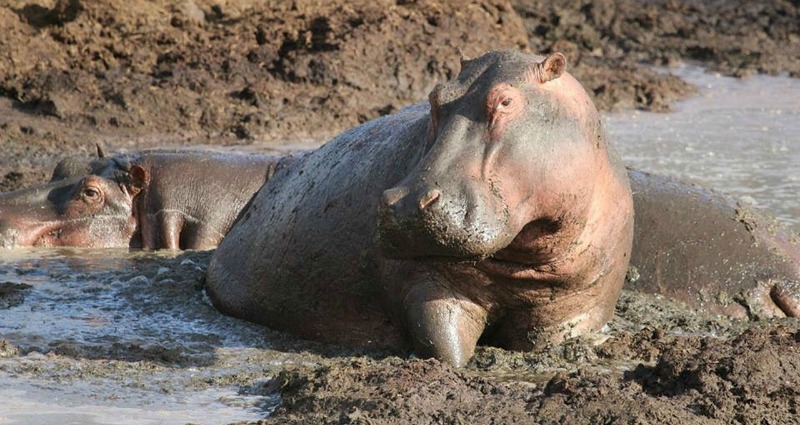 Hippos enjoy wallowing in mud holes.
If you go on a guided night drive safari you can spot them grazing on land.
They signpost their pathways with dung piles.
Habitat for hippos
They like regions with plenty of water since they spend most of their time submerged to keep their skin cool and moist. Hippos, which are amphibious animals, spend up to 16 hours every day in the water.
They prefer water where there are gently sloping banks.
When viewing with these African animals in water you will see only the tops of their heads and backs exposed.
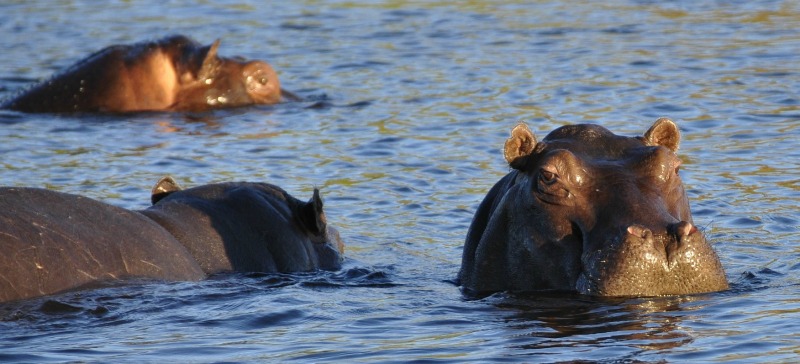 The hippopotamus feeds exclusively at night and spends most of the day in the mud or water.
During most of the day they must spend their days submerged in water, which must be at least 1.5 meters deep because on land, they overheat and dehydrate quickly.
These "river pigs" can submerge themselves under water for up to six minutes.
What do Hippos eat?
The hippopotamus grazes mostly at night and spends most of its days in water. They have a restricted grazing range extending about 2 miles (3.2 km) from water.
Hippos have very few predators on land and can therefore afford to feed on their own.
Hippos can eat around 40kg (88 lb) of short grass per day.
Hippos also enjoy eating green shoots and sometimes reeds.
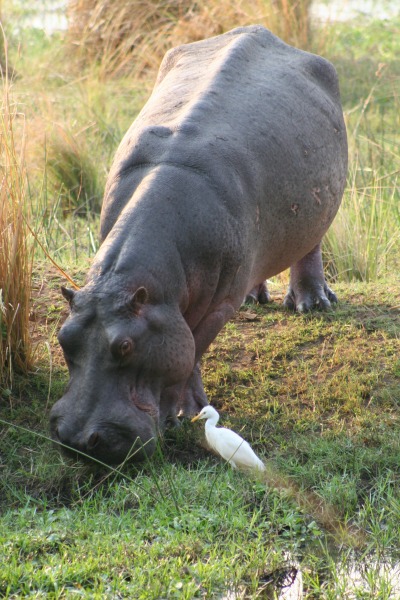 Hippos are herbivores, which means they get their energy from vegetation.
They will eat grass down to a smooth lawn by plucking it with the hard edges of its wide lips.
Hippos tend to choose open, short, green grass areas to graze.
If the supplies near the water are exhausted, they will cover up to 10 km in a night on the round trip between water and grazing.
Both ears and nostrils can be closed to stop water getting in.
These wildlife animals can stay underwater for up to six minutes and can either swim or walk along the bottom.
When submerged, the water supports most of its weight, and they move with a slow-motion grace.
What Social behavior does Hippo's exhibit?
The basic unit of hippopotamus society is a group of up to thirty, containing females with their baby hippos.
They are ruled by a single dominant bull that ascended to his position by defeating other bulls in combat.
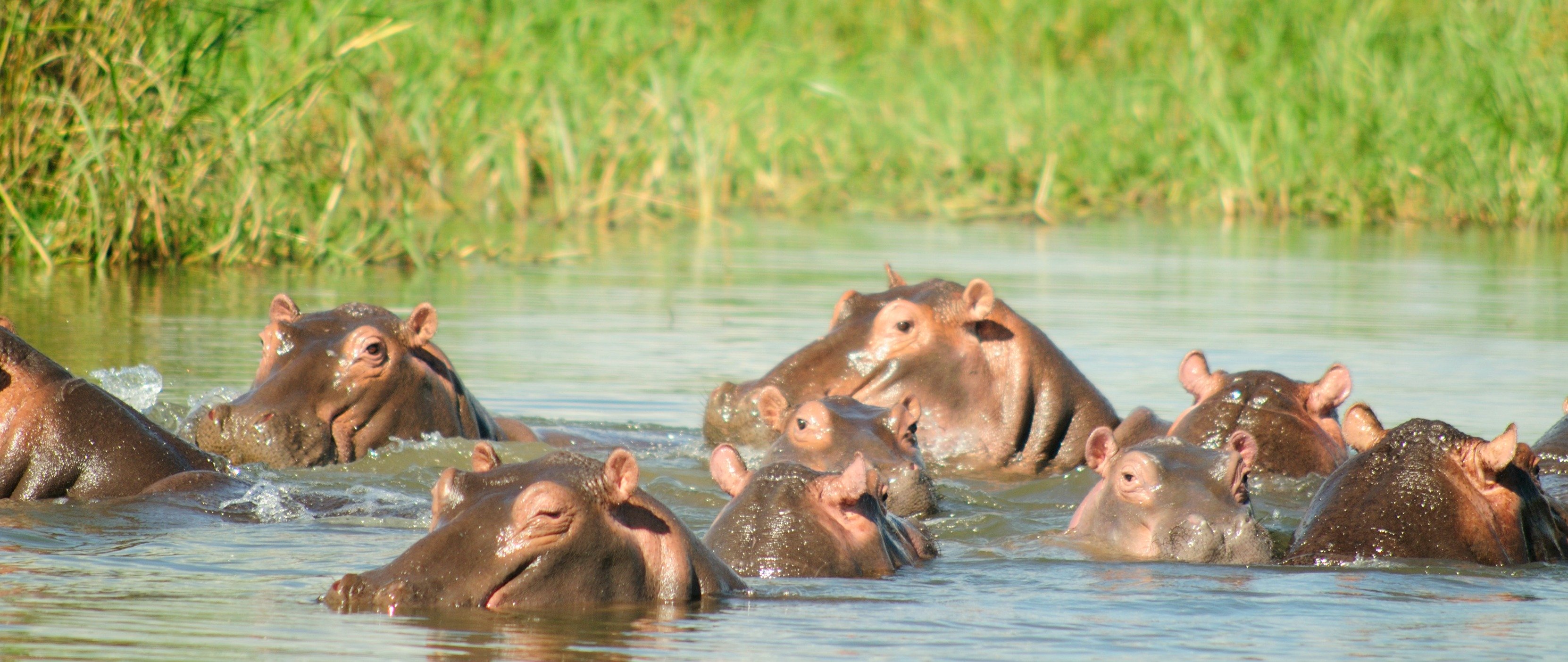
This gives the bull exclusive access to the females in his group. The Groups are territorial, each occupying a stretch of river or lake.
The herd bull is extremely aggressive to challengers. He marks his territory, by splattering dung onto rocks and bushes.
At frequently marked spots dung can accumulate into heaps half a meter deep.
By defecating in the water, they inject important quantities of energy and organic matter into the aquatic food pyramid.
Why do male Hippopotamuses have those big teeth?
Hippo fights over territory and females are savage.
Disputes between adult males begin with a yawning display that shows off their formidable teeth.
Yawning displays the tusks and is a dominance signal. This is a sign for intruders to stay away!
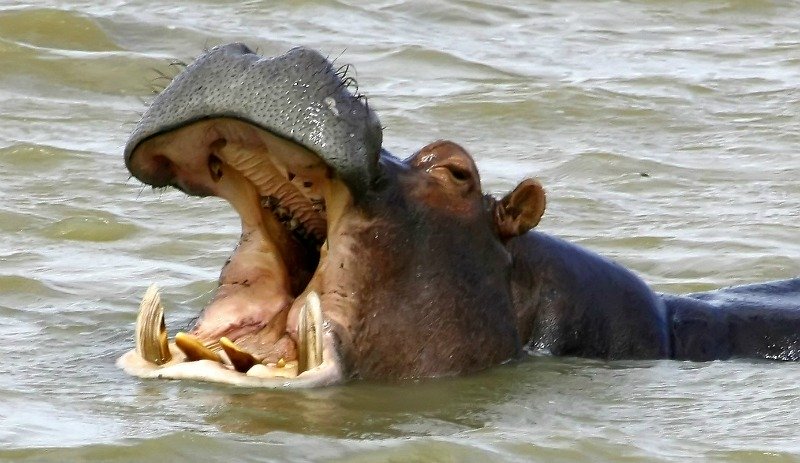
The contestants then scoop water at one another. Unless one of them submits by lowering his head, a full-scale fight follows.
During the fierce battle, the sharp canine tusks are used to stab and slash the opponent's head and shoulders.
Despite their thick hides they suffer serious and sometimes fatal wounds in these battles.
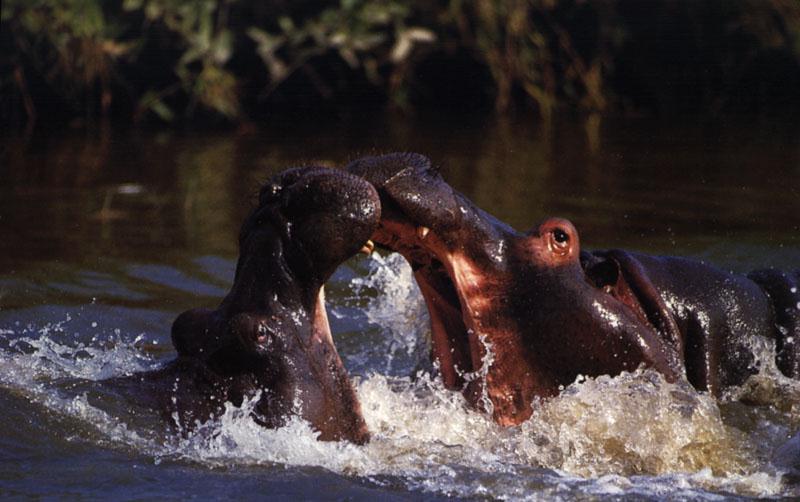
Hippo males are usually covered in scars from territorial battles.
If the losers are not killed; they are driven out of the pool and have little chance of survival. A bull may hold a territory for as long as 12 years.
In the water their main natural enemies are crocodiles. In a fight a crocodile stands no chance against an adult hippo.
They also attack boats that get too close to them, especially if a female has a calf.
How do Hippos procreate?
As a rule, only the dominant male of a herd mates with the females.
He checks their reproductive condition by smelling their urine.
Mating takes place in the water with the female hippopotamus completely submerged.
Conventional mounting takes place in the water.
The buoyancy effect alleviates the bulk that would make mating on land exceedingly difficult.
These are the only African land mammals that mate in the water.
Baby Hippo facts
Infants are very playful.
If you are lucky enough to spot calves on your African Safari, you will see them indulging in play fights and pushing contests.
The youngster stays in the water for the first few days, after which it goes with its mother when she feeds.
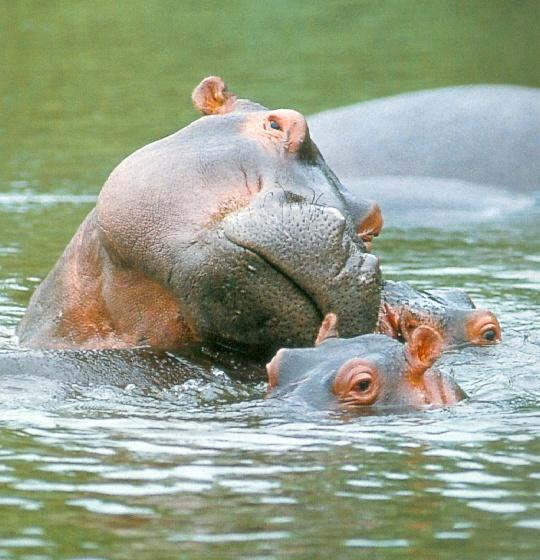
A mother does not introduce her calf to the herd until it is 10 to 14 days old.
The rest of the females act as babysitters.
In water that is too deep for it to stand, a calf uses its mother as a raft.
In crowded populations, dominant Males kill youngsters and newborn babies.
Calves begin grazing at five months of age, and they are weaned at 12 months.
The herd bull drives out adolescent males when they are seven to eight years old.
Young females usually stay with the herd.
Conclusion
With their large mouths, stubby legs, and barrel-shaped bodies, hippos are among the most recognizable creatures in Africa.
You will see them mostly submerged in rivers or lakes, coming to the surface only to breathe.
Hippopotamuses are skilled divers and swimmers who can hold their breath for up to five minutes.
Hippos have important ecological tasks such as habitat engineering in water systems, nutrient recycling through the swirl distribution of highly organic feces, and harboring commensal water birds, parasites, and leeches.
Like this page?
Wildlife home
 |
Wildlife conservation
 |