The Majestic African Elephant
A Fascinating Journey into the World's Largest Land Animal
Enter the fascinating world of the majestic giant that roams Africa's wide landscapes, the African Elephant.
This article discusses the world's largest land animal's intriguing traits, behaviors, and importance in African ecology.
Africa's largest land mammal radiates a clear air of majesty and force.
From their enormous size to their complex social structures, these fascinating creatures have captivated humanity for ages.
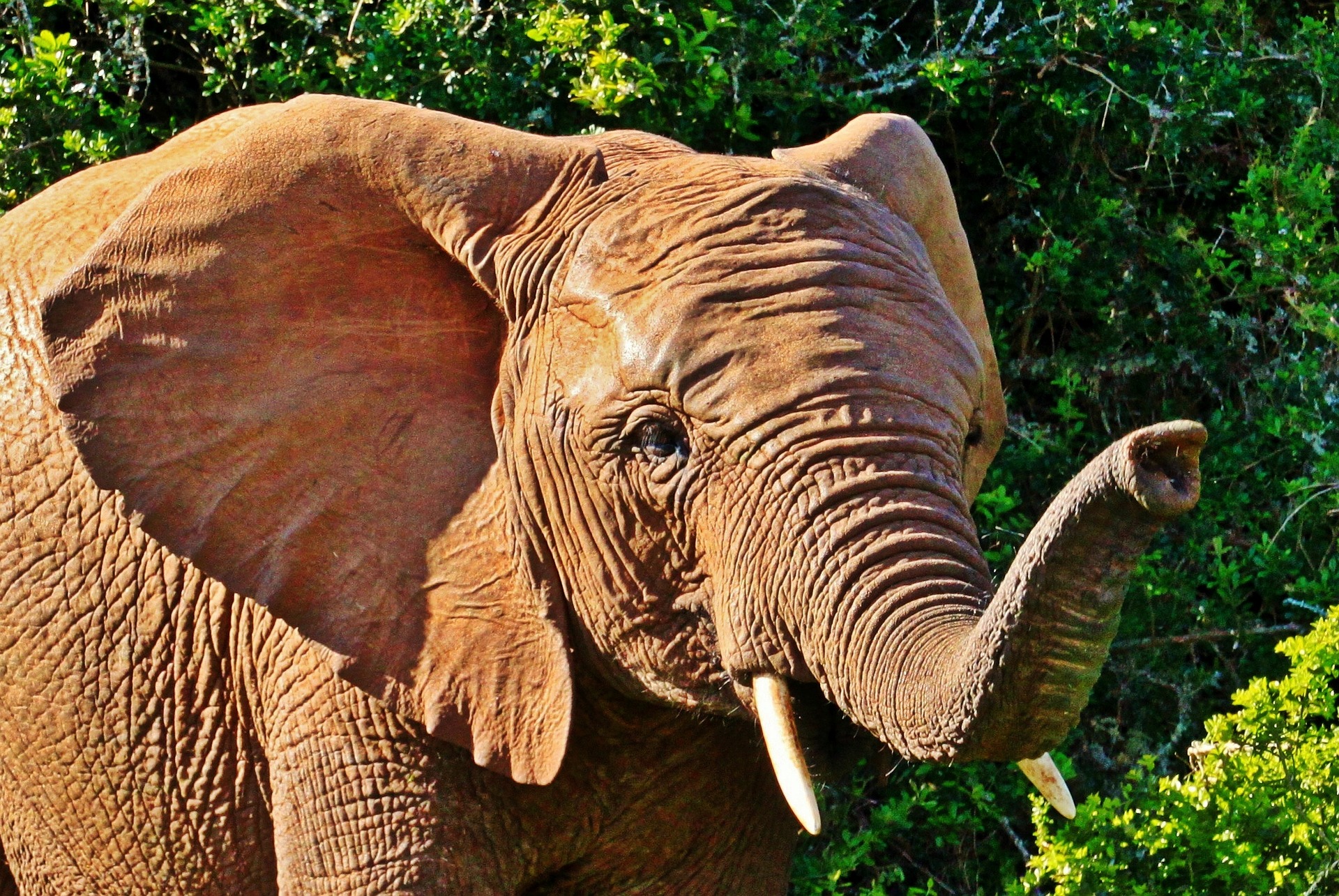
The African Elephant has long captivated the hearts and minds of both wildlife enthusiasts and conservationists with its towering stature and great power.
These gorgeous animals have distinctive tusks, which, tragically, make them targets for poaching, complex social systems, and sophisticated communication.
The African elephant is the world's most versatile herbivore.
Equipped with its unique trunk, which is an all-in-one multi-purpose tool used for grabbing, smelling, drinking, and broadcasting,
Elephant meaning in African culture
The African Elephant is revered as a symbol of strength and power in Africa. Its size, long life span, and devotion to family life are admired.
Elephants have great symbolic value in African culture, representing various characteristics and themes that resonate strongly throughout many African communities. Here are some important features of the elephant's symbolic value:
Symbol of Strength and Power
Elephants are frequently regarded as emblems of enormous strength and power due to their size and might. They are regarded as protectors and guardians, representing physical and spiritual strength.
Wisdom and Knowledge
Elephants are respected for their wisdom and intellect. In many African traditions, they are regarded as intelligent beings with extensive knowledge of the natural environment. This symbolism frequently applies to leaders and elders, who are likened to elephants for their knowledge and experience.
Longevity and Patience
Elephants are recognized for their long lifespans and peaceful temperament, making them symbols of endurance and patience. They are appreciated for their capacity to coexist harmoniously with their surroundings for many years.
Community and Family
Elephants live in close-knit family groupings led by matriarchs, which symbolize strong family relationships and community. They embody the principles of cooperation, loyalty, and social structure that are critical in many African communities.
Fertility and virility
Elephants, because of their huge size and power, are associated with fertility and virility in various African civilizations. They are frequently connected with success and the continuation of life.
Spiritual and ritual significance
Elephants appear significantly in a variety of spiritual beliefs and ceremonies. People often regard them as sacred animals and associate them with specific deities and spiritual rituals. Their presence during ceremonies is thought to bestow benefits and protection.
African bush elephant fast facts
The elephant trunk can twist around and pull up grass, pick up small items like seeds, and remove branches from trees.
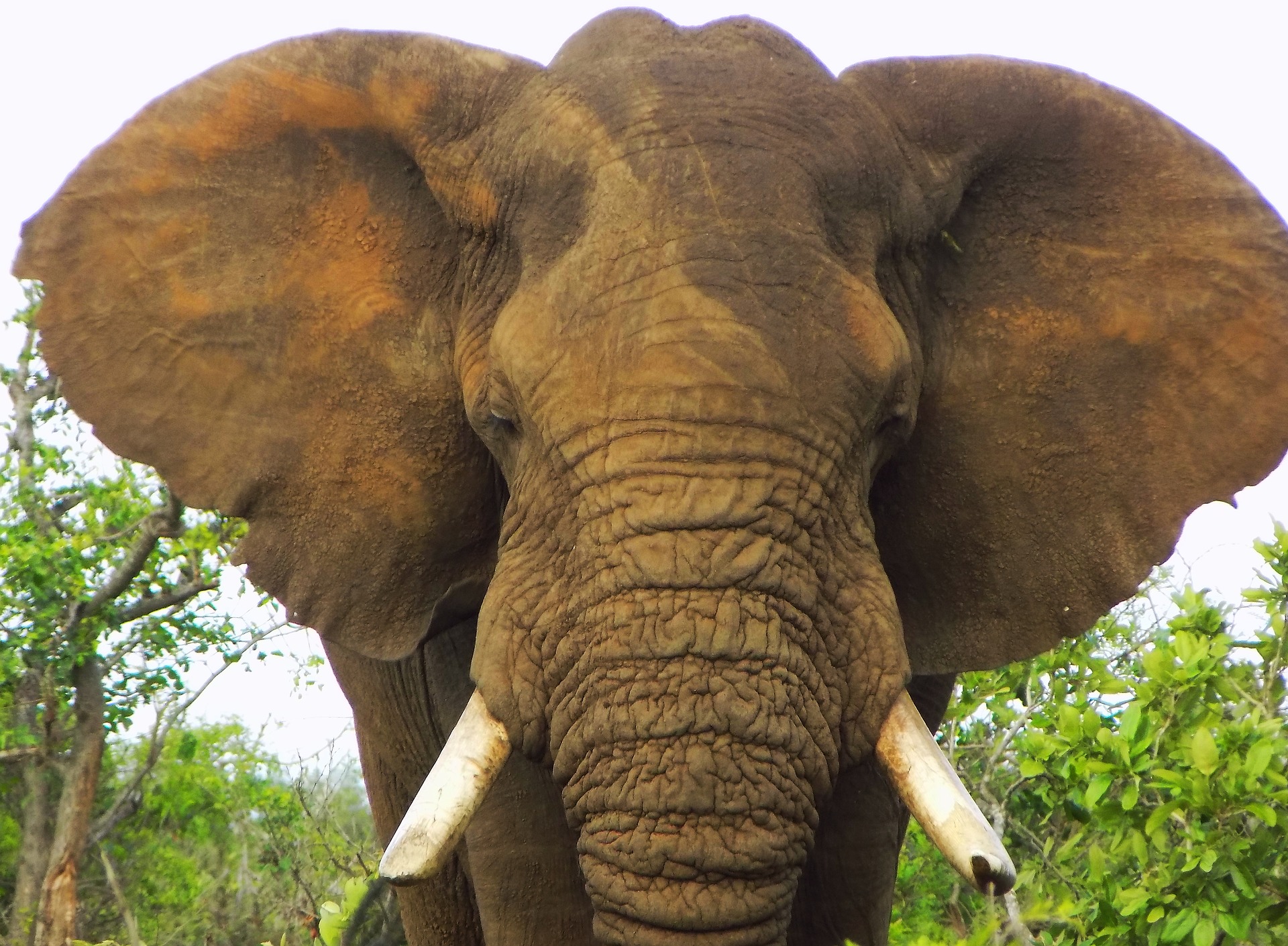
Another handy tool at their disposal is the elephant tusk. Especially useful for tearing tree bark loose and digging holes for water.
|
What exactly is an African elephant? |
It is an enormous animal that holds the record as the largest land mammal on earth. |
|
Where do they live? |
They live in the savanna regions of Africa as well as the dense rainforests of central and West Africa. |
|
How tall is an African Elephant? |
Height of up to 4 meters. |
|
Which country has the most elephants? |
Botswana is the African country with the most elephants at +- 290,000. |
|
What color are African elephants? |
Their naked skin is rough and grey-brown. Often covered with mud and dust. |
|
Is the African elephant endangered? |
IUCN Status: Vulnerable |
|
Scientific name |
Loxodonta africana |
Why is the African elephant usually seen as part of a herd?
The basic stable social unit among African elephants is a group of closely related adult females with their young of various ages.
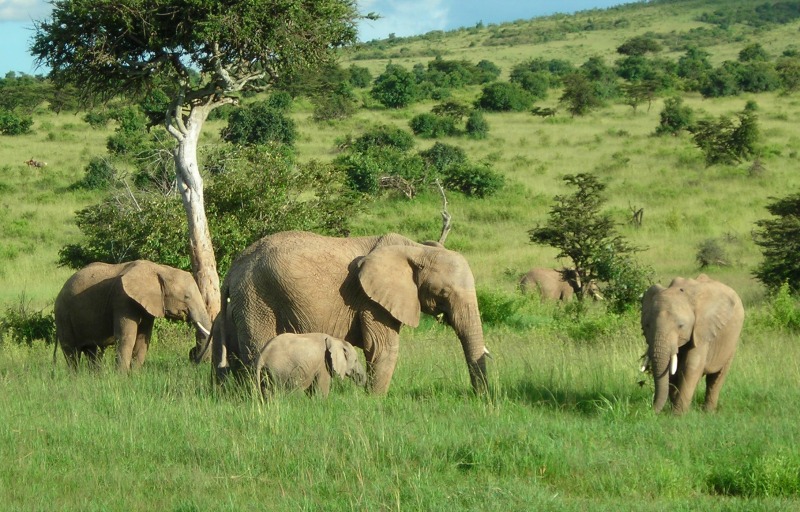
The movements of a family group are directed by the oldest and biggest cow (often referred to as the matriarch).
This would typically be a female that has accumulated her necessary experience over 30 to 40 years.
This female will make most of the decisions about where and when the herd forages, drinks, and rests.
If these old cows are shot during an elephant hunting their knowledge is lost and the rest of the group will wander aimlessly.
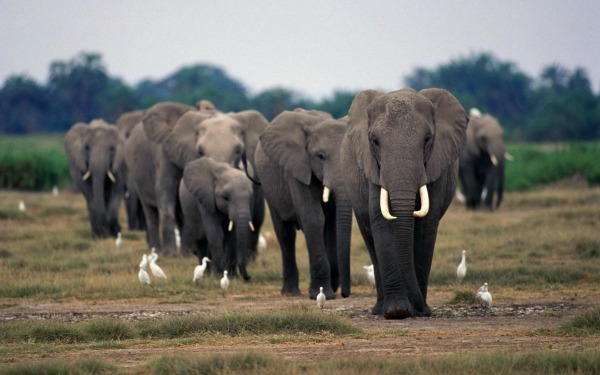
Males sometimes form small unstable bachelor groups.
Two or three younger apprentices known as askaris may accompany an old male.
Family groups and males may gather into herds several hundred strong.
If their usual food and water supplies, dwindle elephants will move long distances to reach more favorable conditions.
The members of an African elephant family group takes loving care of one another. If one of them is sick or injured, others will stay with it to defend it.
The calves get especially close attention. The adults help them climb steep banks and will protect them from predators.
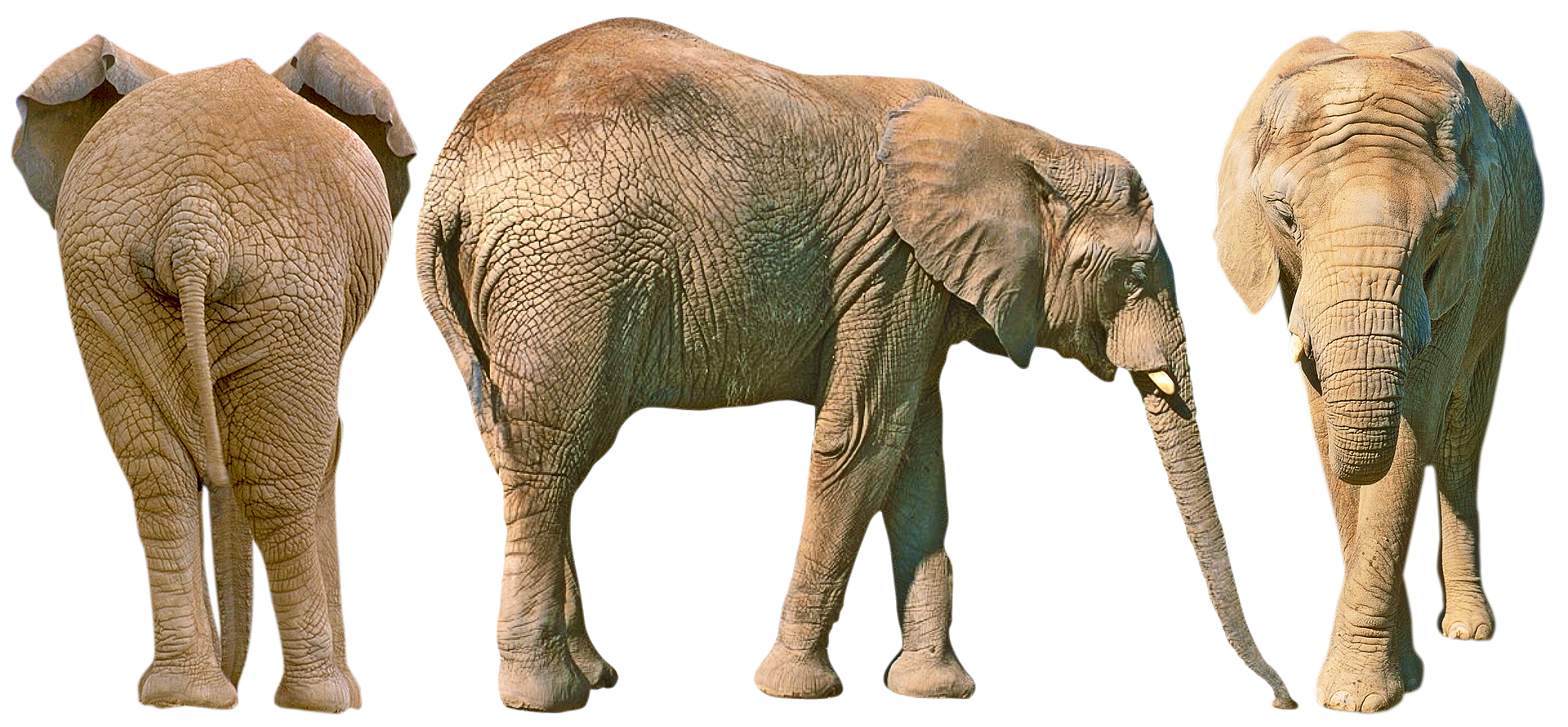
African elephant size
|
Weight males |
11 000 pounds - 13 200 pounds |
5 000 to 6 000 kilograms |
|
Weight females |
6600 to 7700 pounds |
3000 to 3500 kilograms |
|
Height males |
9 foot 10 to 11 foot |
3 to 3.3 meters |
|
Height females |
8 foot 4 inches |
2.5 meters |
Elephant ears
Elephant ears are used to cool the body off. It's also useful to rid themselves of irritating flies.
If elephants flap their ears is therefore not always an expression of anger as is commonly assumed.
An animal of this size, with no sweat glands and dark body color, can easily overheat in African conditions.
Besides their natural cooling mechanisms of standing in the shade, resting at midday, and coating the body with mud, soil or water, elephants have another trick.
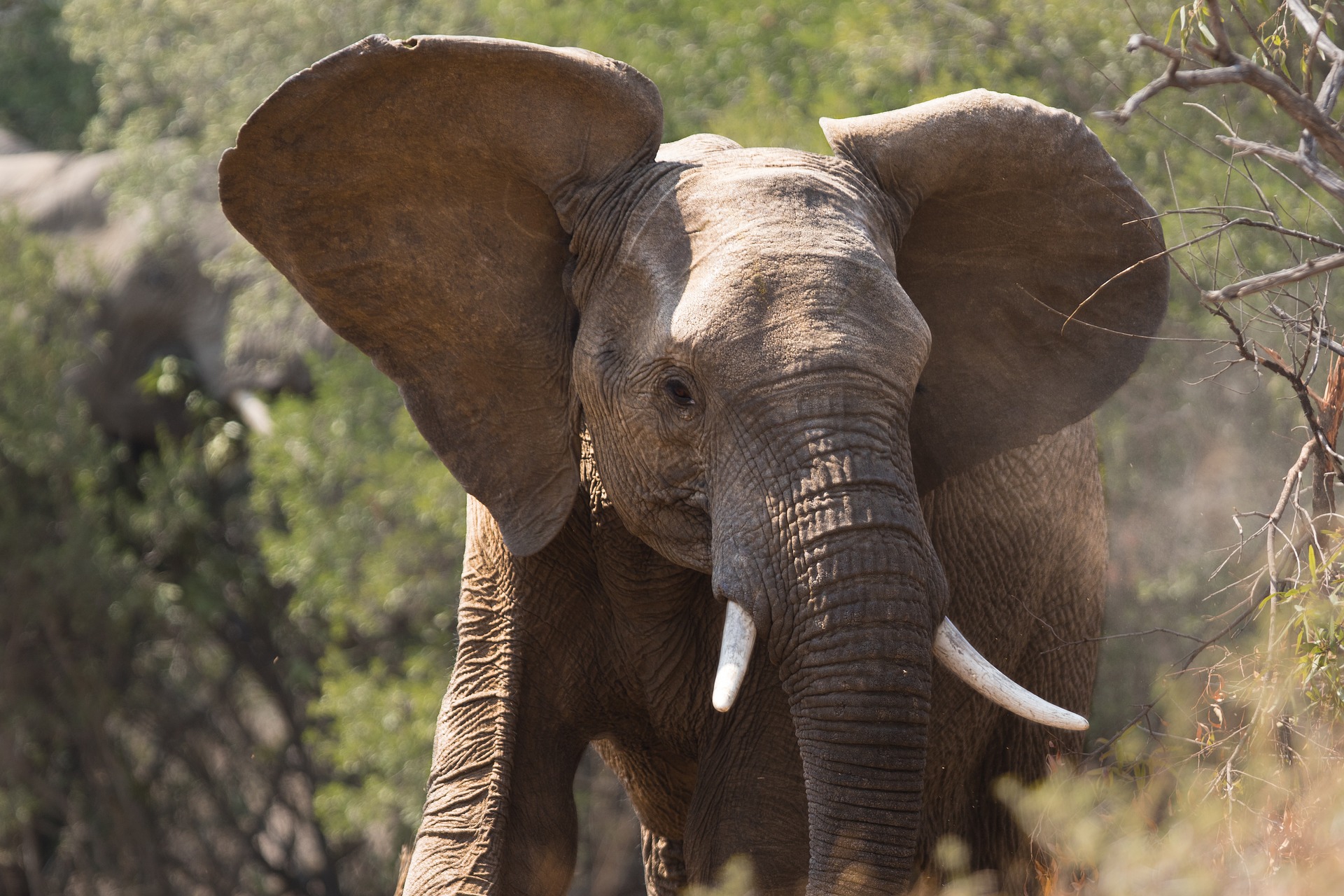
The ears are lavishly supplied with blood in a substantial network of veins that dilates when the weather gets hot.
The skin of elephant ears is fairly thin. The total surface area of two ears could account for up to 20% of the entire body surface area.
The blood flowing rapidly through the veins and capillaries is enough to allow heat to dissipate.
Heat loss and blood cooling are significantly enhanced by the flapping, which causes cooling currents of air to pass over the veins.
The cooled blood helps keep the body core cool.
Elephant eyes
Elephants have poor eyesight with a range of only 25 feet.
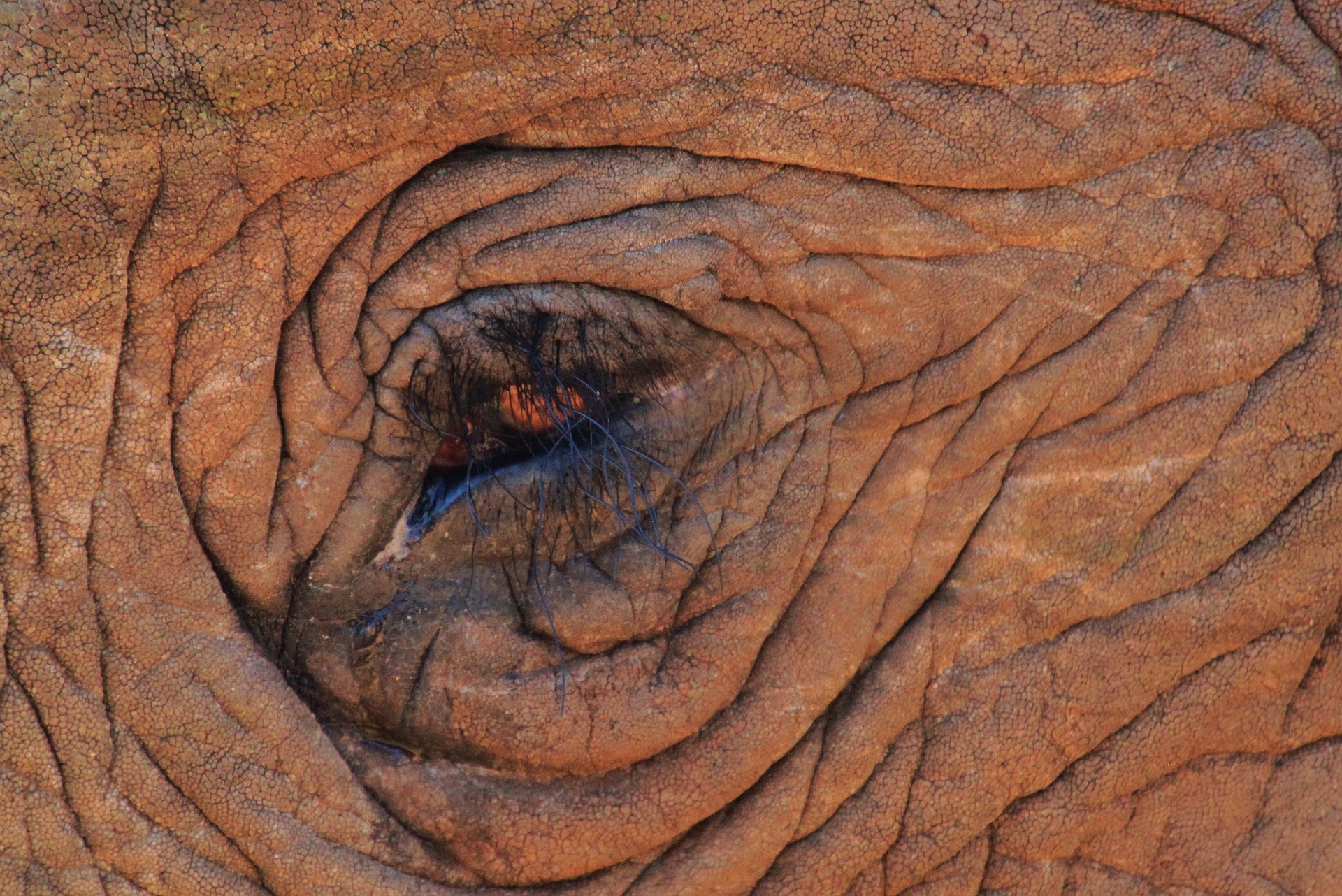
Elephants' eyes are small. Considering the position and size of the head and neck, they have limited peripheral vision.
Elephants can see well in the dark.
How do elephants use their trunks?
The elephant trunk has evolved and can be used for various functions. It is a modified nose.
This trunk alone contains thousands of different muscles.
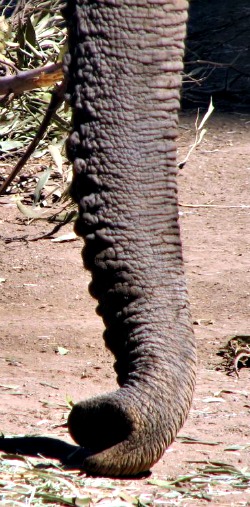
The trunk is a modified nose made of muscle.
Elephants are known to sweep up food and shower themselves with water using their trunks.
Elephants can move hundreds of kilometers per hour through their trunks. Furthermore, water may flow through an elephant's trunk at a rate of 3.7 liters (1 gallon) every second. That is comparable to the flow of around twenty-four shower heads.
With this tool, an elephant can do a variety of things, from picking up a small maroela fruit or berries to picking up a massive tree trunk.
When you look closely at the trunk, you will notice hairs on it which makes it sensitive to touch.
The muscles of the trunk provide the trunk with its versatility. Four large external muscles along the top, side, and bottom of the trunk control the main movements of the trunk.
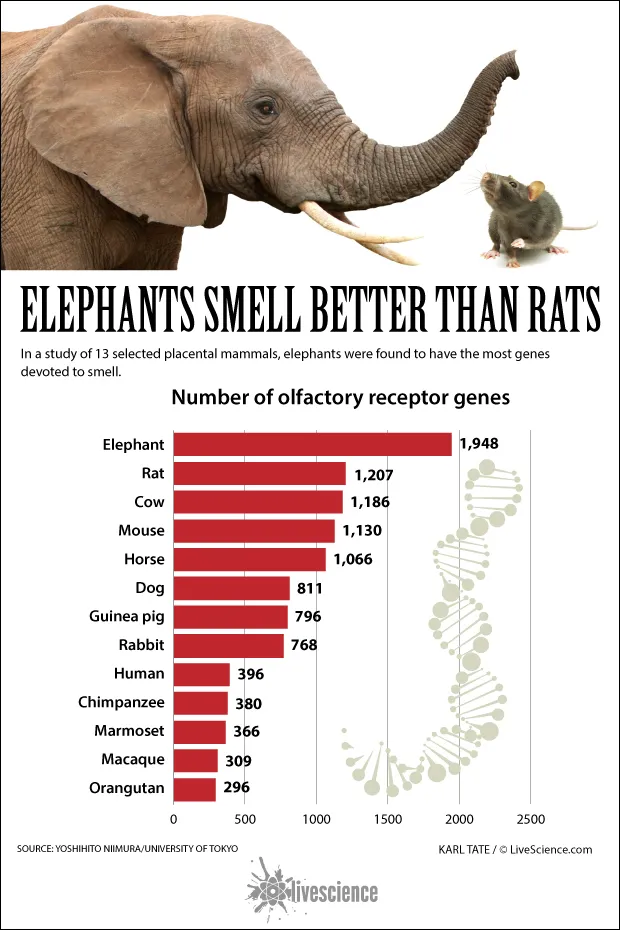
It is believed that an elephant can distinguish smells several hundred times better than any dog with its trunk.
The trunk is important for social interactions among the herd individuals and used for caressing - especially between
mother and calf.
Other social interactions may include greeting and demonstrations of dominance or submission via various trunk postures.
What does an elephant use its tusks for?
Tusks are mainly used to dig for specific food items like tree roots and also for defense.
In encounters during fights for dominance, they can use tusks to stab opponents.
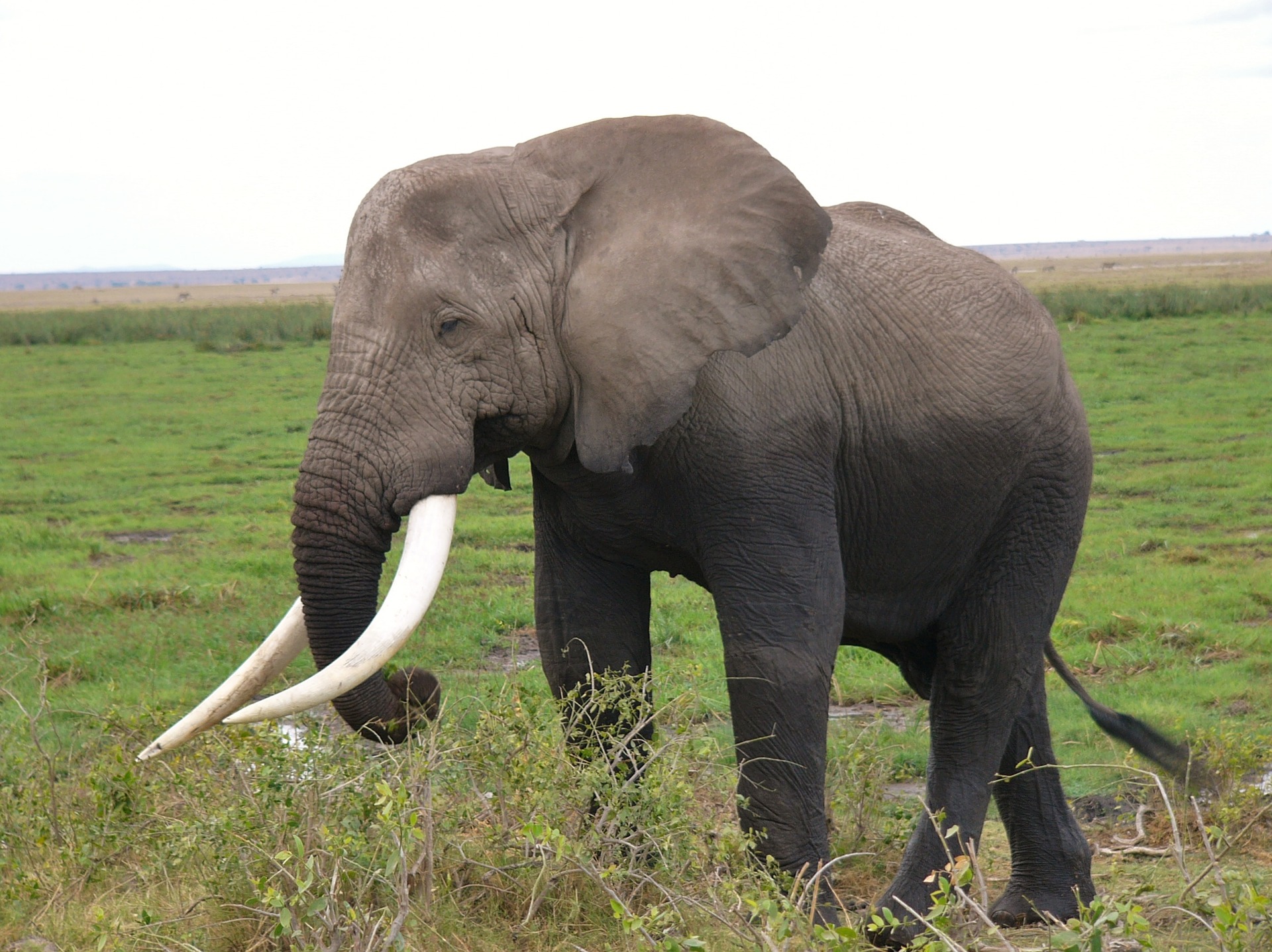
Elephant tusks never stop growing.
Older adult elephants will therefore have the biggest tusks which make them the priority targets of ivory poachers.
Adult elephants often incline to use one tusk more than the other. This could result in differing tusk lengths.
Sometimes a difference in the length of tusks is the result of breakages.
What are the differences between the African and Asian species of elephants?
Asian elephants
|
African elephant
|
|
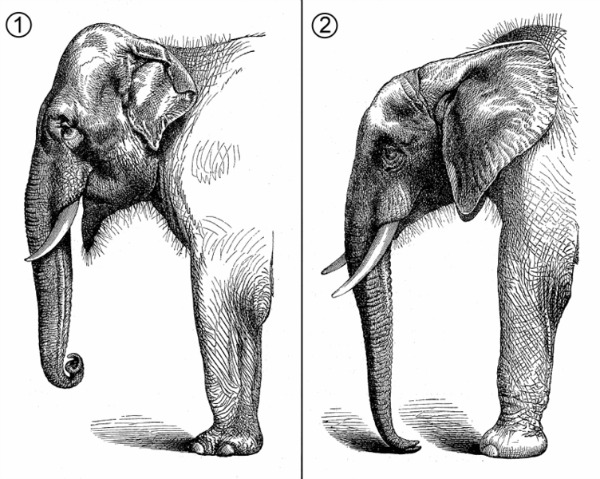
Crumpled from the front to the back. Notice the humped area on the top of the head. The forehead is dented. Convex or straight neck. Weighs 3000 - 6000 kg. |
Not crumpled from the front to the back. No humped area on the top. The forehead is not dented. Concave neck. Weighs 4000 - 7000 kg. |
Also, notice ----
The African elephants have extremely large ears that can be likened to the shape of the African content.
Similarly, the smaller Asian elephant ears can be compared to the shape of the Indian subcontinent.
In the case of the African species, both males and females have visible tusks.
With the Asian species, only males have obvious external tusks.
The females have small tusks that may or may not protrude far enough to be visible.
The Asian species has one semi-prehensile "finger" to its trunk while the African specie has two of them.
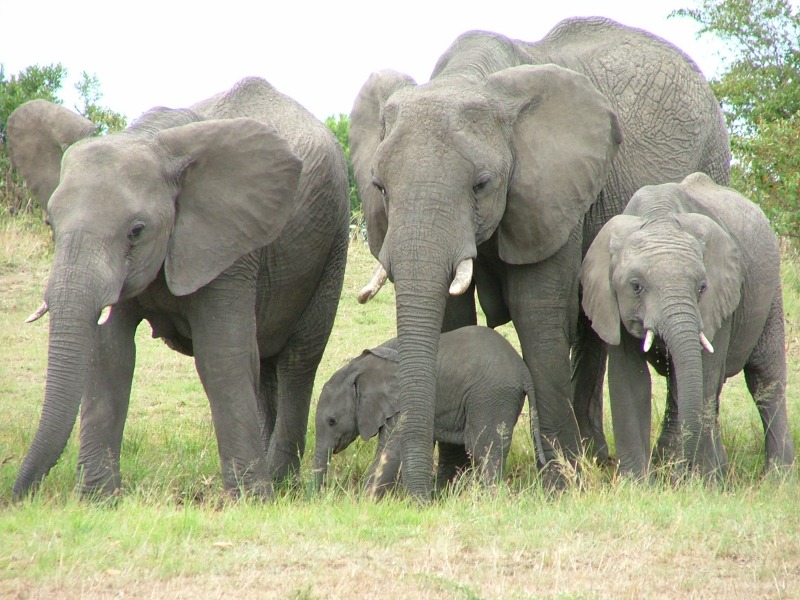
Elephants that swing their tales from side to side are trying to keep the flies off their body and this usually means it is happy and relaxed.
How do elephants breed?
Unlike hippos that rely on the buoyancy effect of water for copulation, the African elephant bull does mount the female in a conventional manner on land.
Elephants breed throughout the year.
Males younger than 25 years old are unable to compete for access to females on heat.
From the age of 25 bulls periodically goes into musth as their testosterone levels rise to six times the usual level.
At this time they walk with their head high and they become very aggressive towards other males, which avoid them.
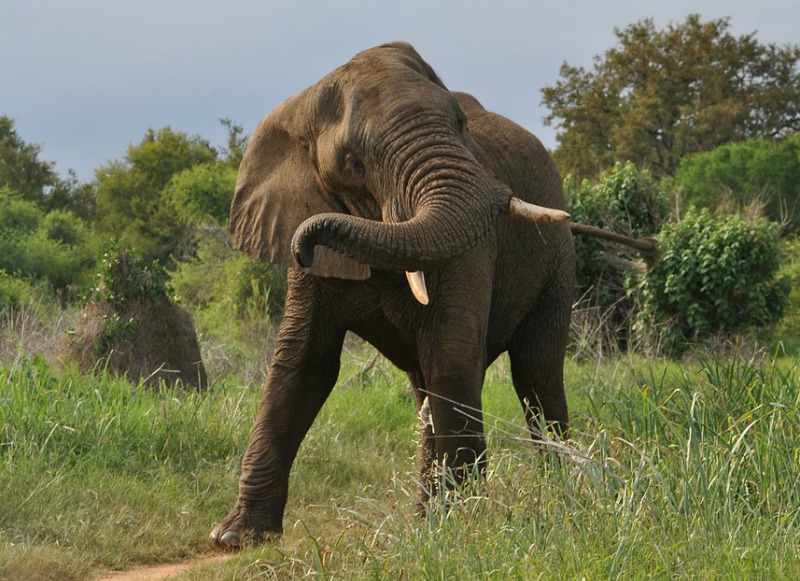
Musth bulls will fight to the death over access to females.
In the restricted area of the Addo elephant park, musth bulls kill young males often enough to slow the growth of the population.
Younger members of the herd act as nannies to calves but all family members take full responsibility for the protection of the calves.
Between 25 and 35 years they mate, in the female oestrus period when conception is unlikely.
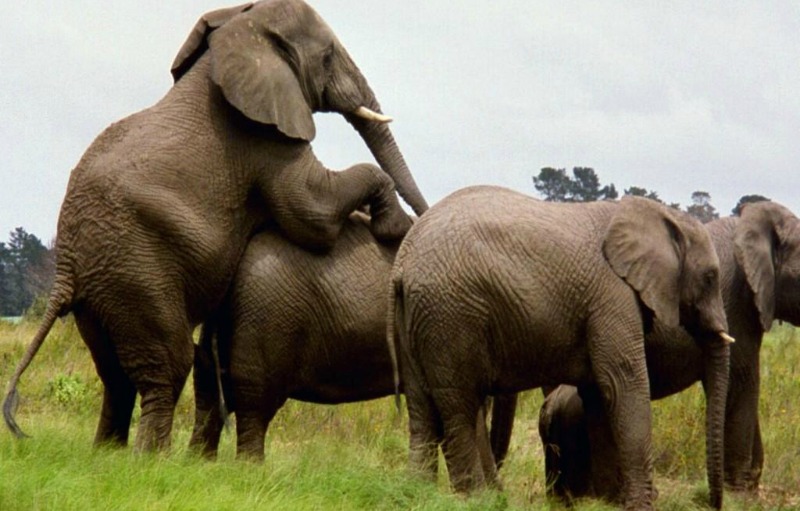
Males older than 35 years guard and mate with females at the most favorable time for fathering a calf.
Mating takes place at about 8-hour intervals.
Female elephants have a longer pregnancy than any other mammal—almost 22 months. Cows usually give birth to one calf every two to four years.
When it is time for labor contractions increase as the labor continues.
Wild elephants usually give birth at night.
It is possible for a female elephant in labor to interrupt the birth if it occurs during the day.
What are some interesting baby African elephant facts?
At birth, an elephant baby elephant already weighs some 200 pounds (91 kilograms) and stands about 3 feet (1 meter) tall.
Baby elephants can stand and walk within an hour of birth.
Baby elephants begins to nurse within a few minutes, using its mouth, not its trunk.
An elephant calf is suckled for at least two years and even after weaning it remains closely bonded to its mother.
When a baby elephant attempts to suck from lactating females other than its mother it will be repelled - usually with a vigorous slap from the cow trunk.
If a baby elephant loses its mother the other females in the group will take care of it.
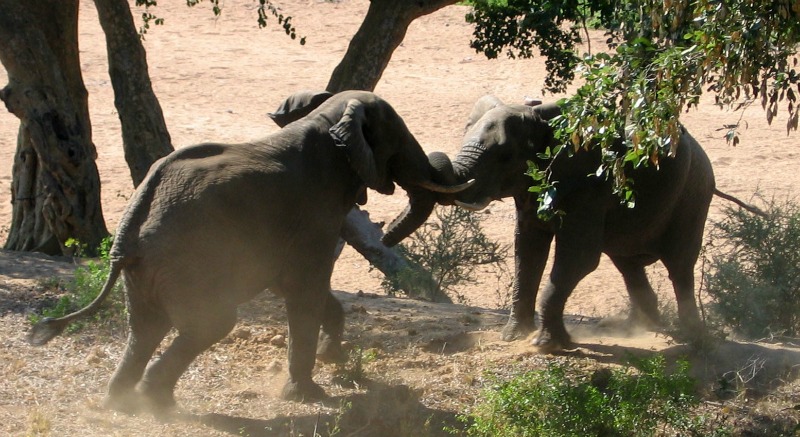
Young elephants play by splashing and spraying each other with water and mud.
They also wrestle with their trunks and practice fighting in pushing competitions.
They also mock-charge other species such as antelope.
Like this page?
Wildlife home
 |
Wildlife conservation
 |