Cheetahs' Lightning Speed and Outstanding Grace: Discovering Their Captivating World
Cheetahs have long captured the interest of nature lovers all around the world. These gorgeous creatures, with their distinguishing markings and slim, muscular frame, can achieve speeds of up to seventy miles per hour, making them the fastest land animals on the planet.
But why are these magnificent creatures so remarkably quick?
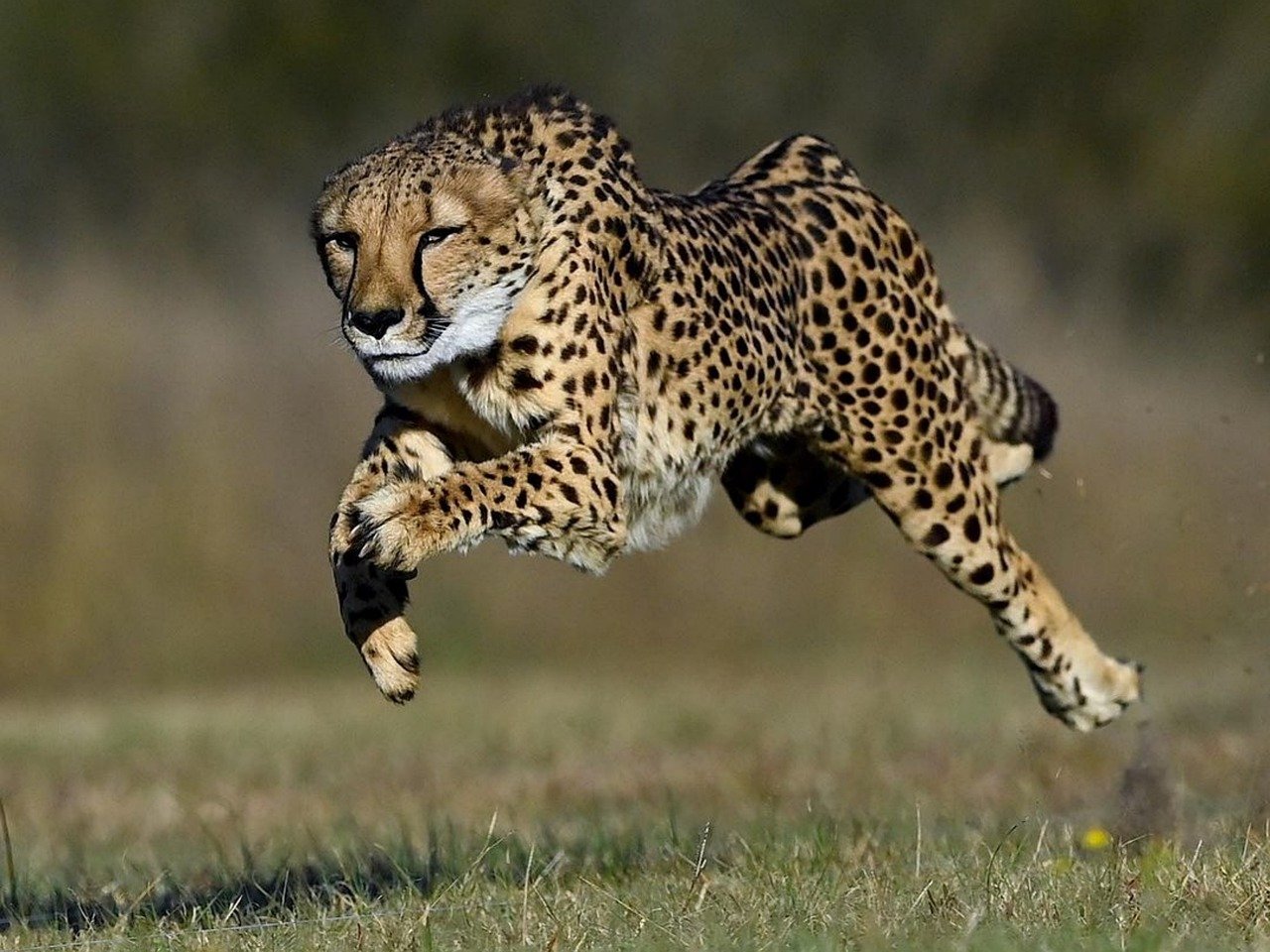 How big is a cheetah?
We'll look at how a cheetah's physiology and behavior, from their light body shape to their specific hunting methods, all contribute to their amazing agility.
Cheetah life cycle phases
Gestation, birth and protecting the babies from danger
Cubs leave the den, the importance of starting to play, learning how to hunt
Becoming independent from mother, becoming a master hunter
Life as an adult cheetah: finding a mate
Let me guess. You already know that the cheetah is the fastest animal on earth.
But there is more to the hunting dynamics of the world's fastest land animal. Speed is only part of the cheetah’s tactic.
A cheetah can only sprint for about three hundred yards before rising temperatures and oxygen shortages force it to quit.
Just as important is the ability to change direction very quickly to catch prey, like small antelopes that are proficient at turning quickly.
Rapid turning during the final stages of the chase may be just as important as accelerating rapidly at the beginning of the carefully planned duel between the predator and prey.
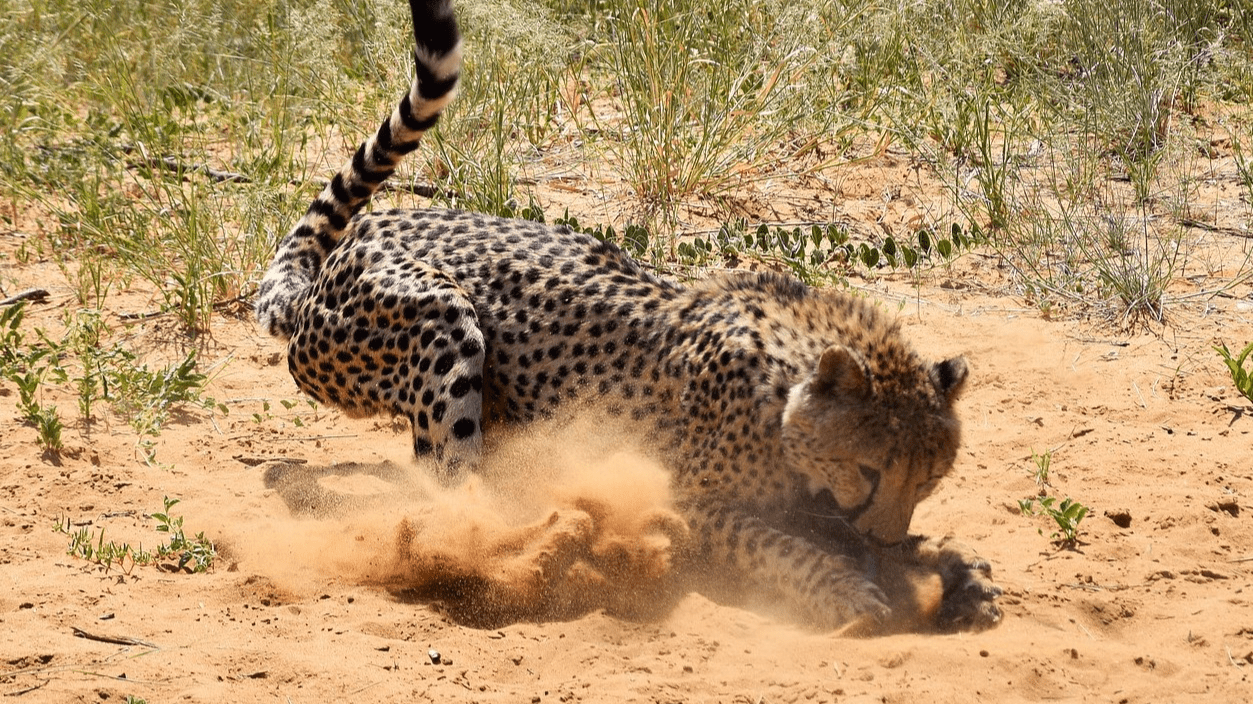
The cheetah chases comprise two phases: The initial rapid acceleration starts to catch up with prey, followed by the prey-specific slowing period.
This allows the cheetah to deal with the quick turn's motions as the distance between them closes.
Further on, we will also look at the specialized camouflage techniques they use to blend into their environment.
Also, why do Serengeti lions kill about 70% of the cubs and only 5% live to independence, among many other interesting facts?
What is a cheetah?
The cheetah is a cat that is famous for its speed.
The cheetah's head, body, legs, and first two-thirds of the tail are covered with black spots.
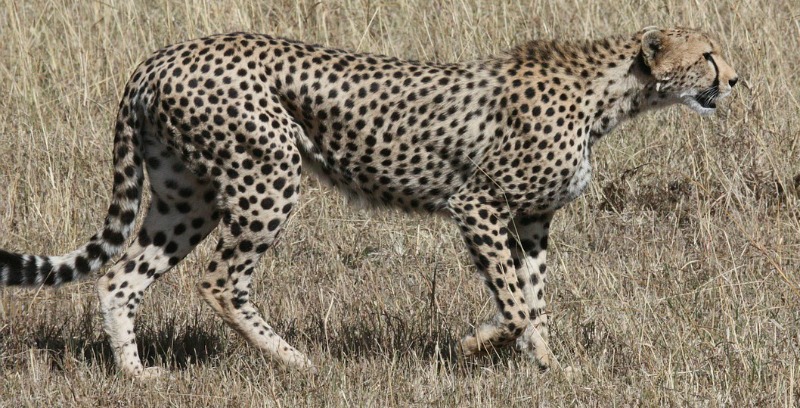 Cheetah legs are long and the claws are permanently exposed
It has a short length from the back of the neck to the shoulders.
The head is small and rounded, with large eyes and a distinctive tear stripe from the inner corner of each eye to the corner of the lips.
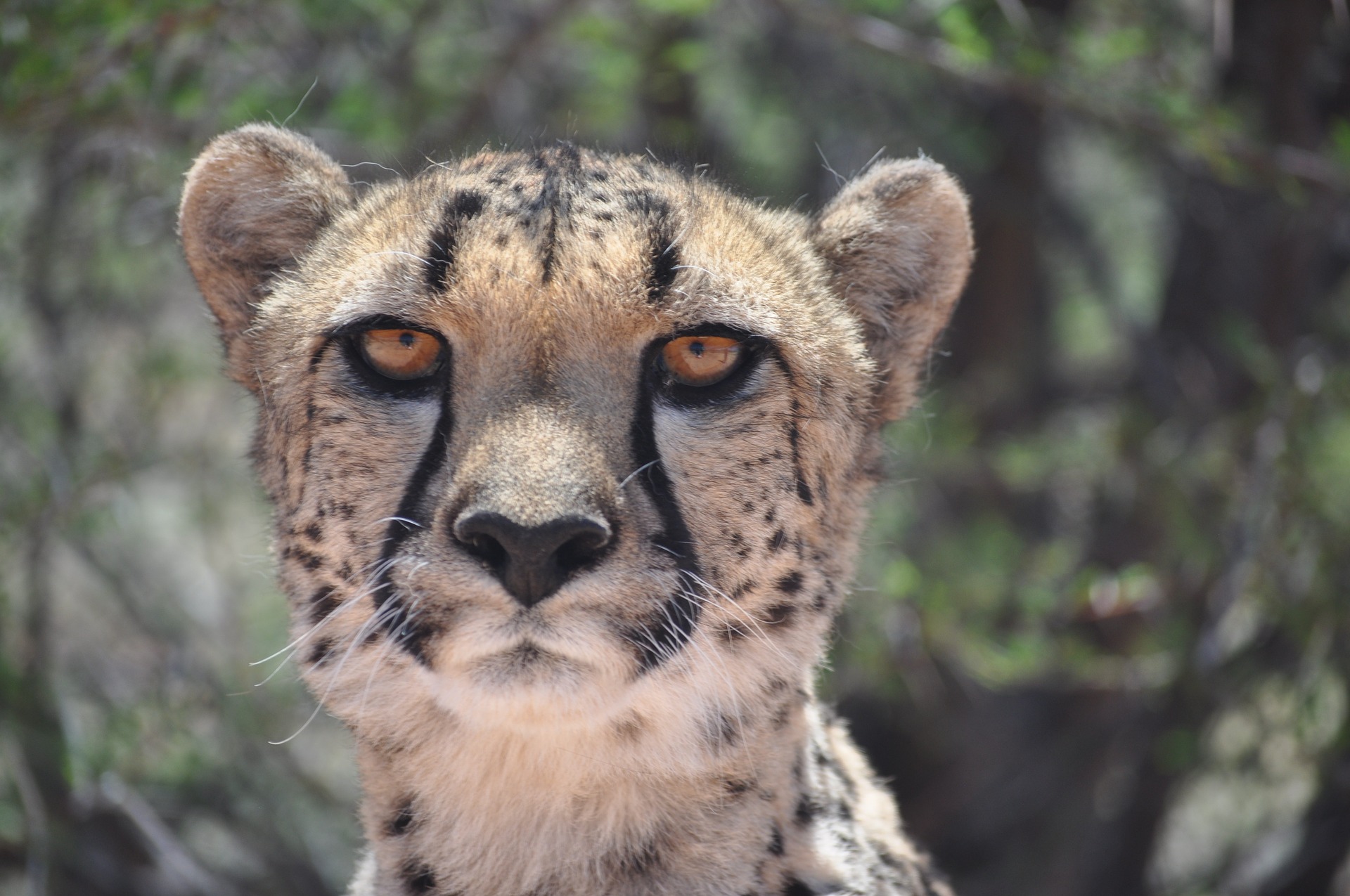 Tear stripe from the inner corner of each eye
The ears are small and round.
The teeth are adapted to eating fast. They must eat their kill quickly to avoid losing it to larger predators.
How fast is a cheetah?
Cheetahs are equipped for explosive acceleration to a full speed of up to ninety kilometers per hour over a short distance.
During the flight phase, all feet are in the air, and the center of mass of the entire body exhibits ballistic motion. During the stance phase, some of the feet contact the ground, subjecting the body to ground reaction forces.
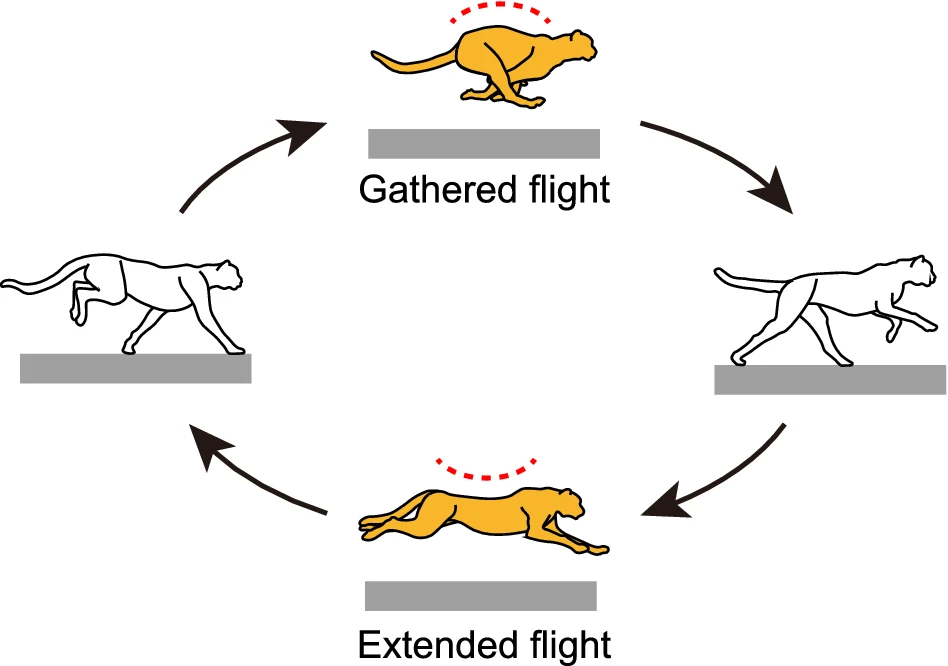 Sci Rep 11, 9631 (2021)
Cheetah galloping involves two types of flight through spine movement: gathered and extended.
The cheetah is recognized as the world's fastest land animal
Everything from the small head to the slender body and highly developed respiratory system contributes to a cheetah's speed.
|
How big is a cheetah? |
Light bones with long, thin legs and a short neck. Body length: 112-135 cm Weight: 34-54 kg Shoulder height: 73+ cm |
|
Tail |
Tail 26-32 inches (65-80 cm) long. Act as a balancing rudder. |
|
Cheetah ears |
Small and round. The black patch behind each ear is believed to simulate a pair of eyes. |
|
Feet |
Small with blunt unsheathed claws. |
|
Cheetah eyes |
Cheetahs have a 210-degree field of view. |
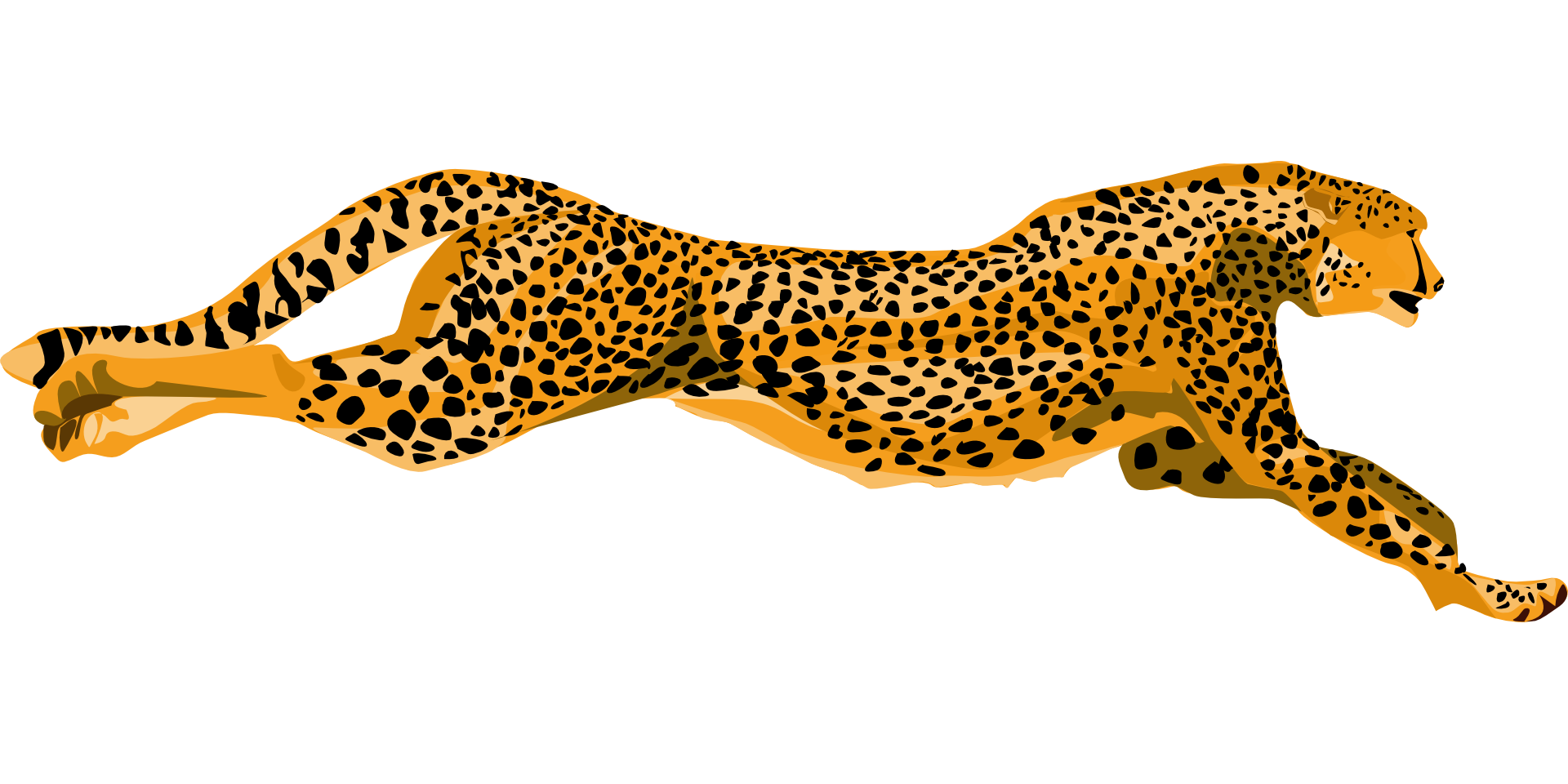 Scientific name: Acinonyx jubatus
The cheetah is not built for long-distance chases but rather for short bursts of blurring speed.
Fastest Cheetah on record
In February 1999, a South African cheetah called Nyana was officially
timed running one hundred meters in a record of 6.08 seconds.
It accelerated from 0 to 80 kilometers per hour in 3.6 seconds.
So, the next logical question would be ----
How does a cheetah use these features to hunt?
We will have a look at the specific hunting techniques of cheetahs in a moment but first, we have to consider their habitat.
What habitat do they prefer?
Cheetahs prefer open grassland and savanna woodland as their favorite habitat.
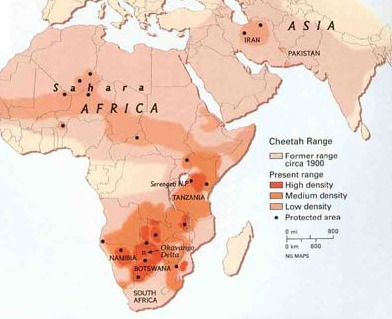 Cheetah habitat - image credit: Connif and Johns
They typically avoid forest and woodland with thick undergrowth as a habitat.
They can operate independently from water.
How do cheetahs adapt to their environment?
Disruptive patterning is a common adaptation in cheetahs.
The spotted pattern of the cheetah reduces detection by breaking up the body outline in tall grass.
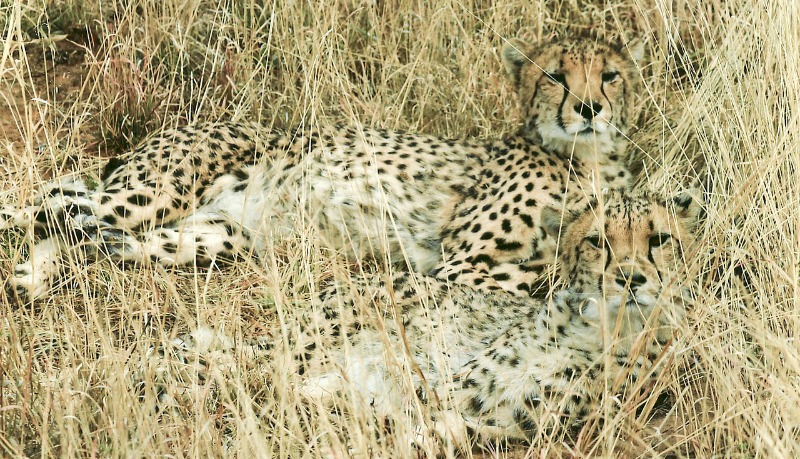 Cheetahs use spots as a disruptive coloration camouflage
Cheetah life cycle phase 1
Gestation, birth and, protecting the babies from danger
Males track down a female in heat from the smell of her urine. The female aggressively rebuffs their first approaches.
During this period, the males spray-mark heavily and fight among themselves for mating rights.
They also scratch up small mounds of loose soil and urinate or defecate on top of them.
|
After one to two weeks of such courtship, the female becomes receptive. She invites copulation by crouching in front of a male. Mating is not as frequent as in other cats. |
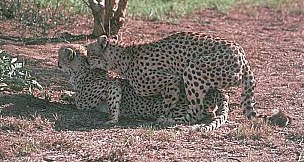 Cheetah male mounts her from behind with a neck bite Cheetah male mounts her from behind with a neck bite |
The gestation period is 90–95 days.
Litters from one to six cubs are born at any time of the year.
Shortly before she is ready to give birth, the mother makes a den for the cubs. This will be in a quiet, hidden spot, usually in tall grass.
Cheetah babies start crawling around the den area at four to ten days old. This is the time when their eyes begin to open.
At around 3 weeks, their first teeth appear.
A mother cheetah will frequently move her litter to protect them from other predators.
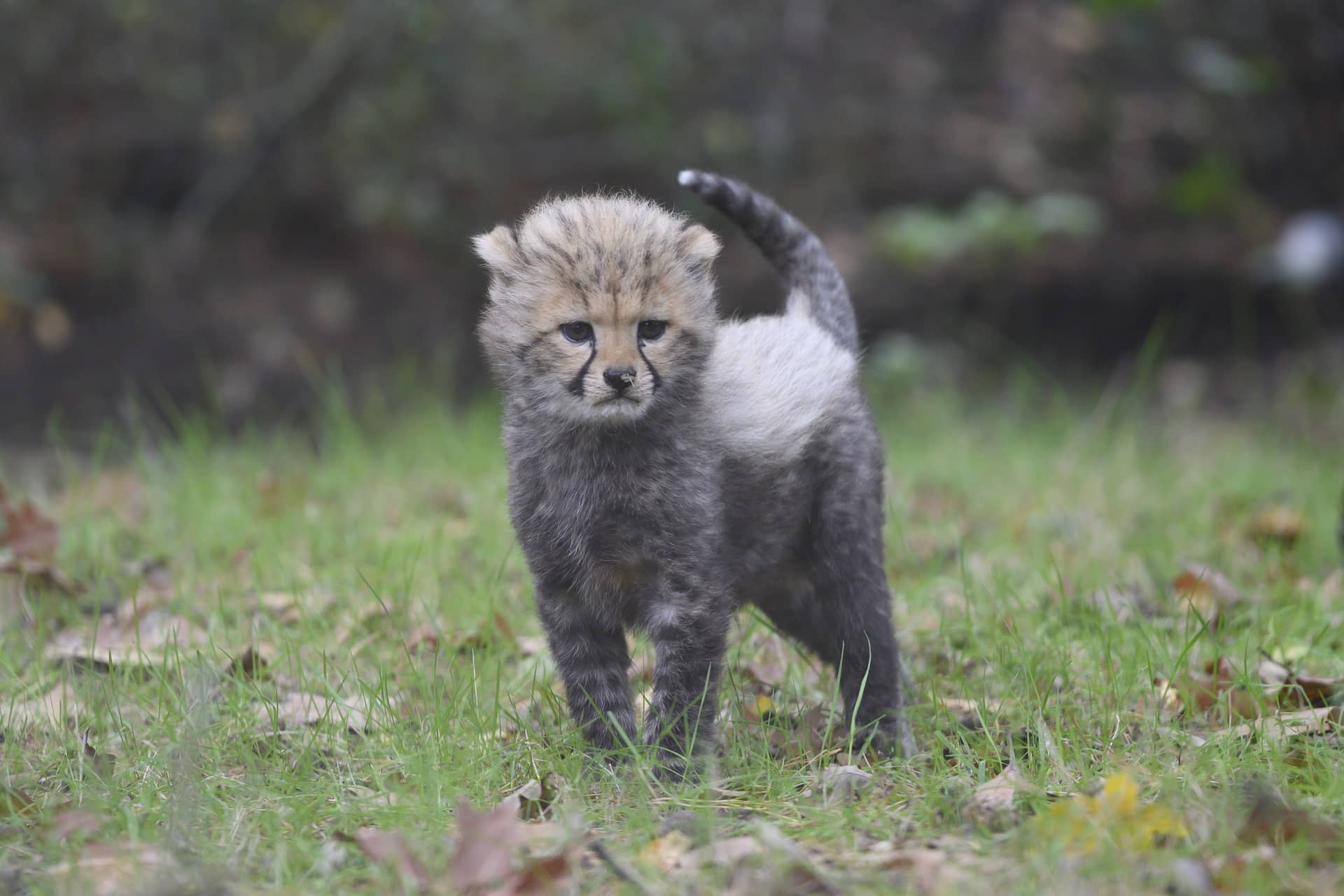
Each baby cheetah weighs from 250 to 425 grams. Cubs are born completely helpless and with their eyes closed.
Scent and touch are used to find their mother's nipples to suckle, which are carefully hidden by their mother in dense cover.
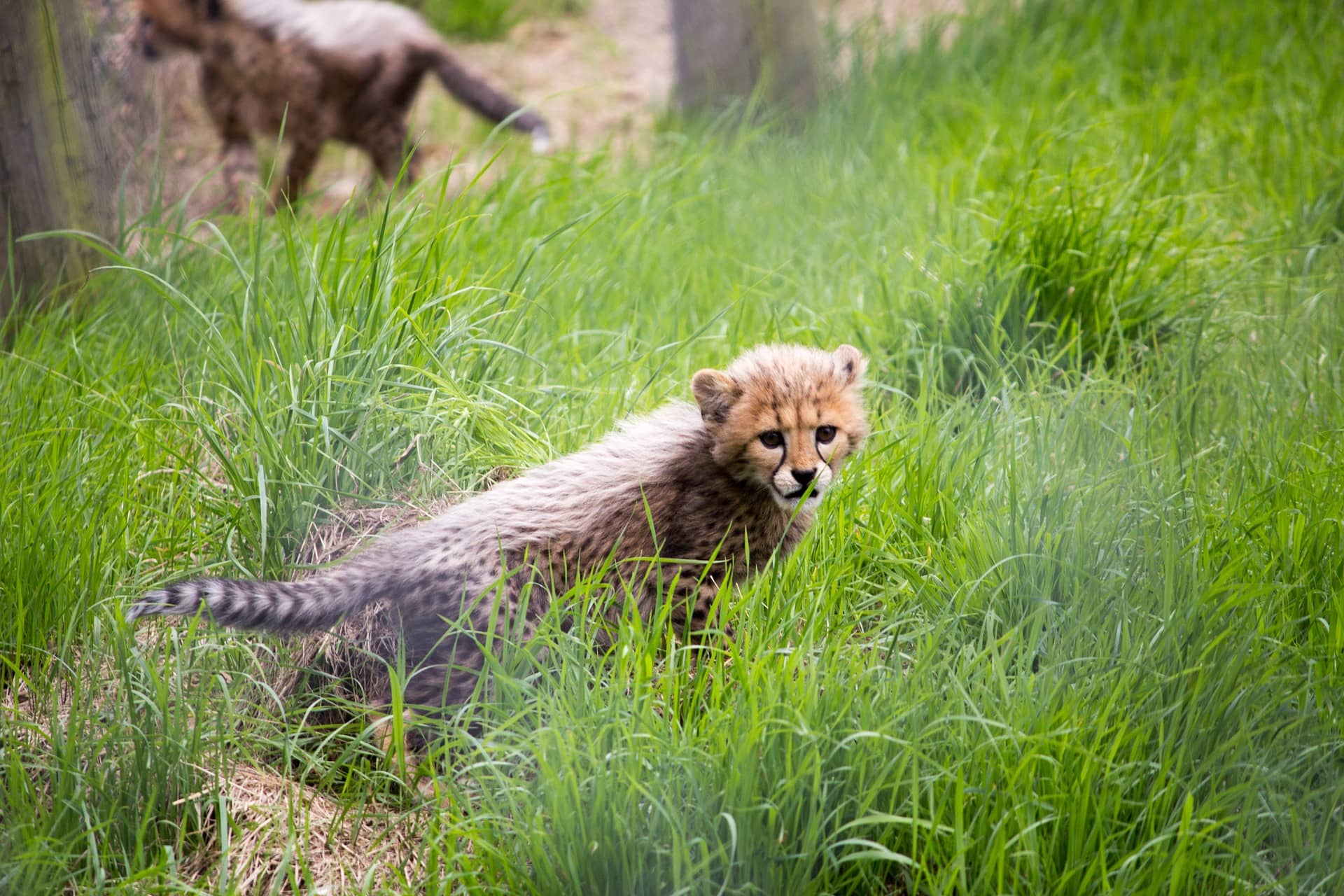 This makes them look like the ill-tempered honey badger.
It is thought that this makes them look like the ill-tempered honey badger (ratel). This is to dissuade other predators from risking an attack.
This savagely fierce little carnivore is famous for the fact that it has no problem running up to a lion, a leopard, or even a buffalo and driving it away.
Cheetah life cycle phase 2
Cubs leave the den; the importance of starting to play and learning how to hunt
The cubs get their first solid food at about six weeks and are weaned at three months.
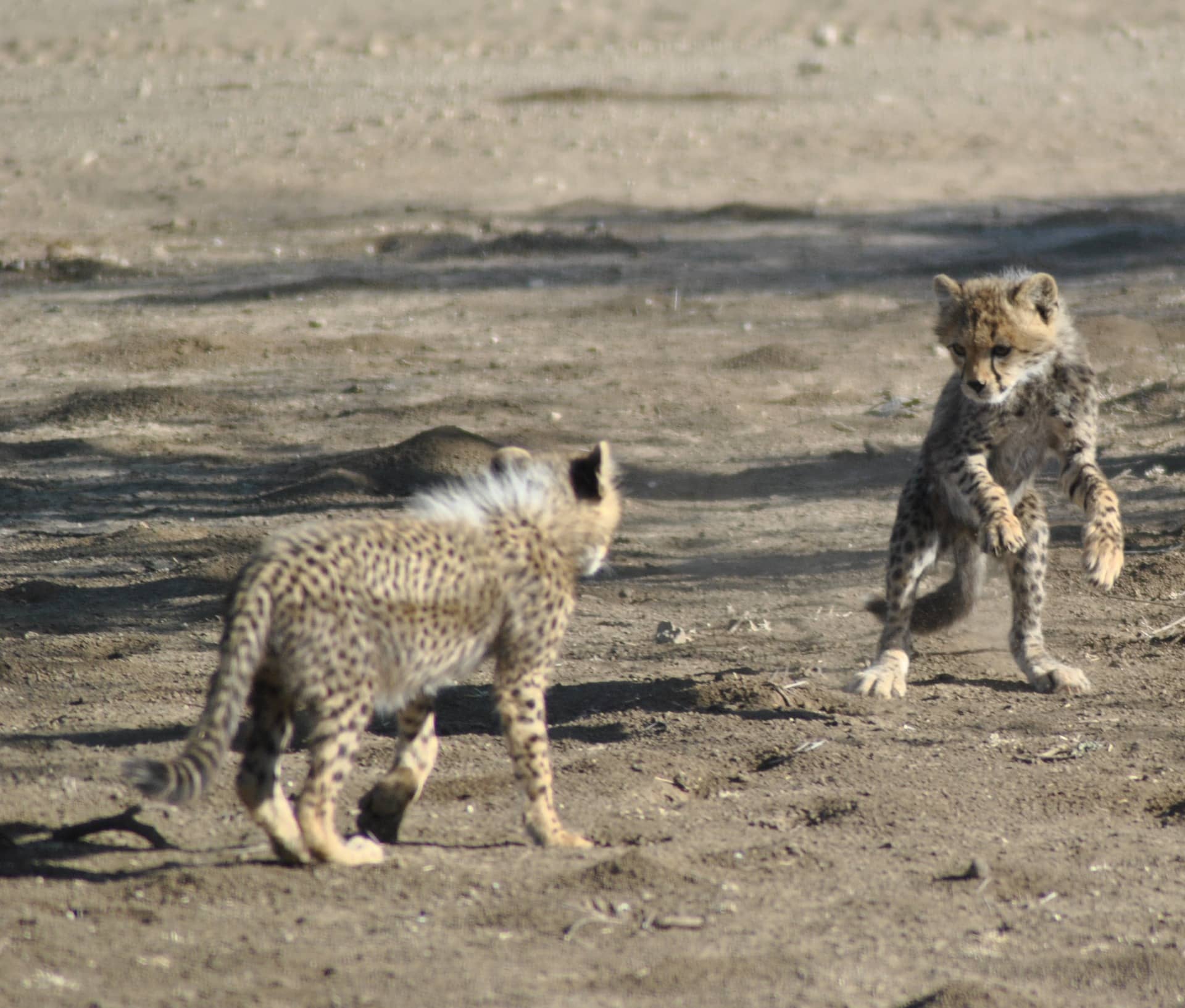
The games cheetah cubs play demonstrate all phases of hunting. They will "play stalk", "play chase" and knock down their siblings as simulated “prey”.
These experiences will teach them skills they will need to survive on their own.
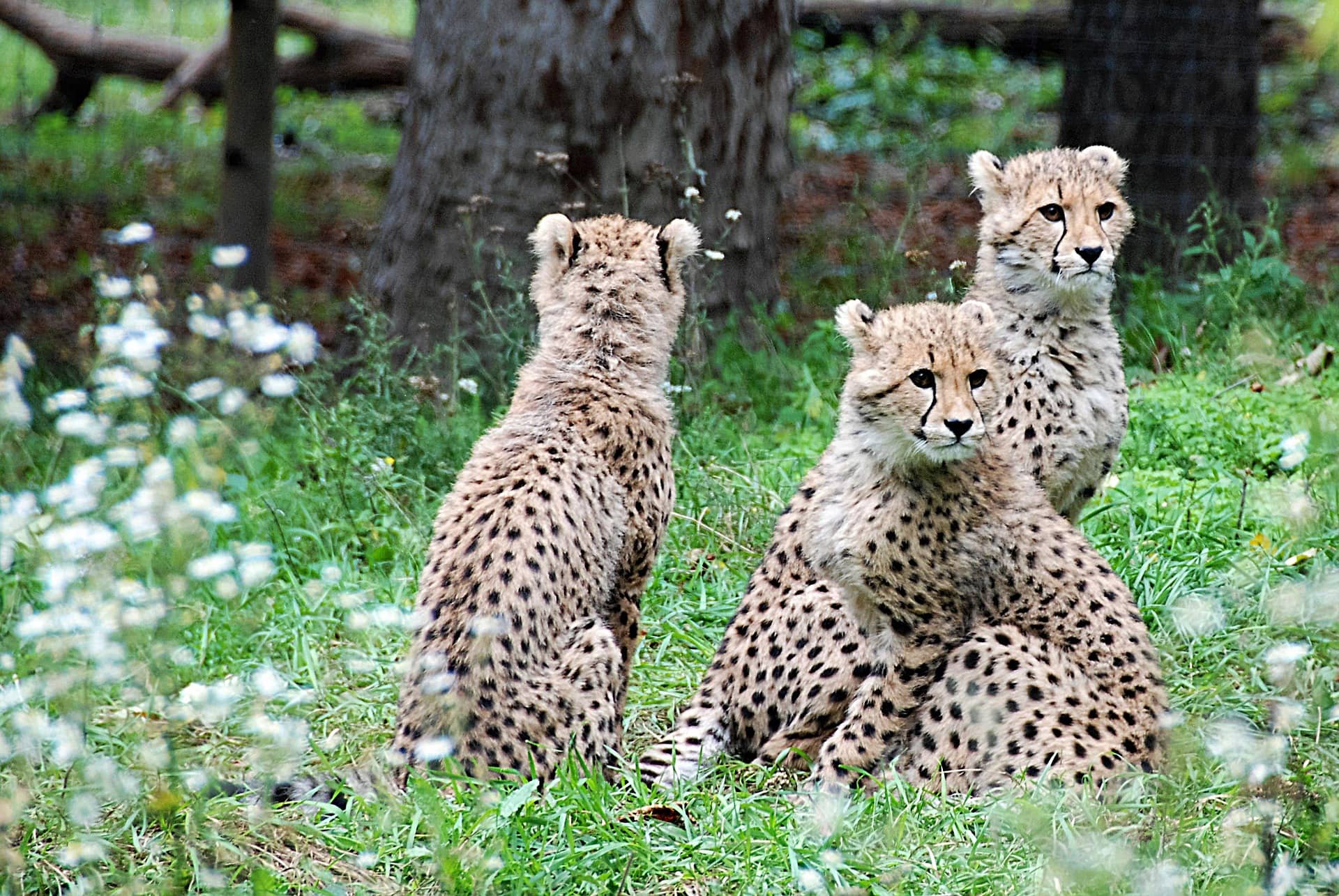
At four to five months their mother brings them live
prey to practice their hunting skills on.
The mother begins bringing live gazelle fawns and hares for them to practice catching and killing. They seldom master the art of killing before 15 months.
How vulnerable are cheetah cubs to other predators?
In the Serengeti lions kill about 90% of the cubs and only 5%
live to independence.
The cubs are very vulnerable to predation and are frequently moved to avoid predators.
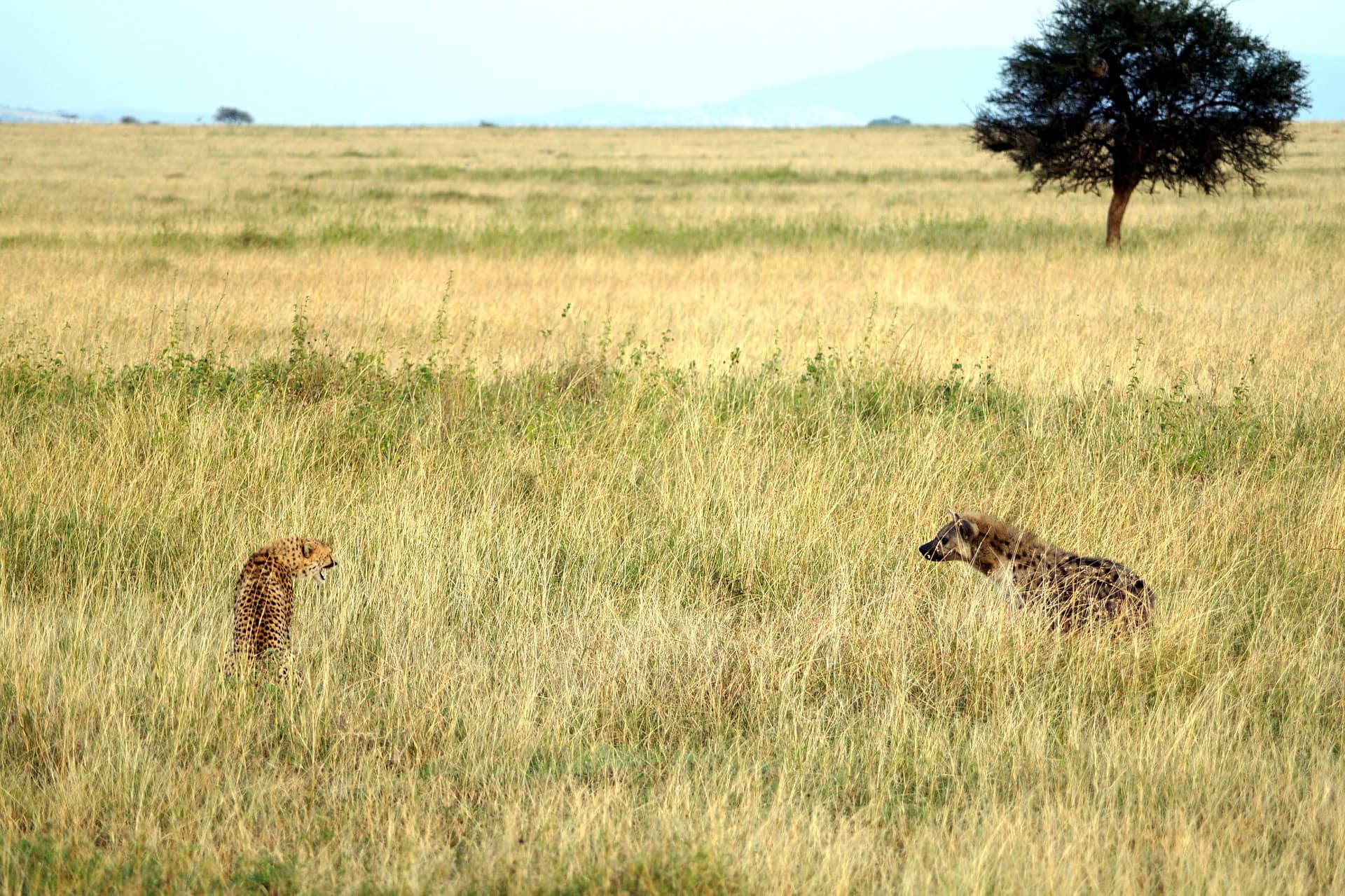
Lions, spotted hyenas, and leopards are the most significant predators of cheetah cubs, but even smaller predators like ratels and jackals can kill them.
Cheetah life cycle phase 3
Becoming independent from her mother, becoming a master hunter
These African animals are highly specialized for a particular style
of hunting.
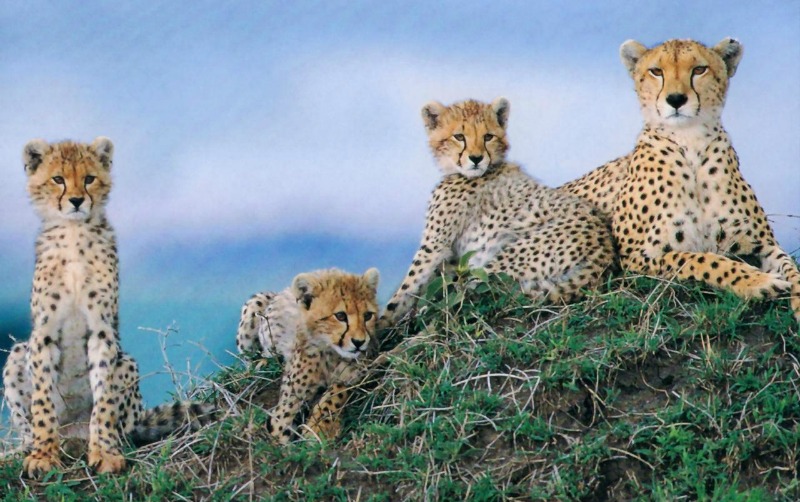
Cheetahs use places of elevation such as a termite mound or trees as vantage points to keep a lookout for prey.
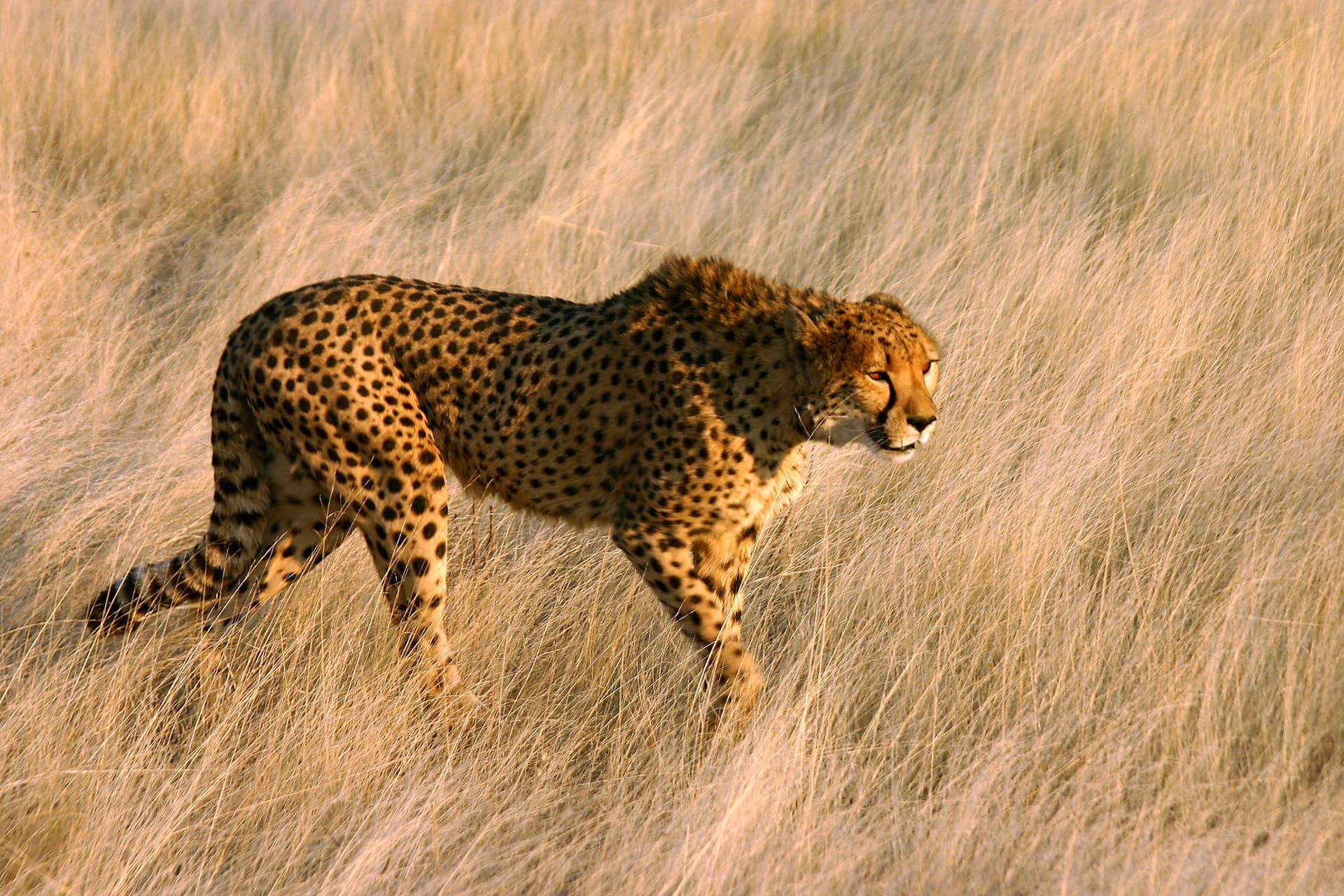
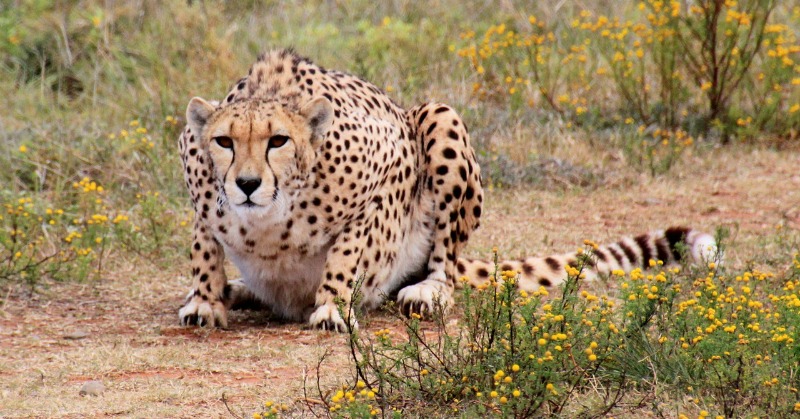 A cheetah hunting its prey will start with a slow stalk
If cover is available, they will use it when stalking.
They typically select the least vigilant prey on the fringes of a group of animals.
If they work in a team, one cheetah will draw the mother's attention, and the other will chase the infant.
A cheetah hunting its prey will start with a slow stalk.
If its prey sees it before it gets within about one hundred meters, it will give up the stalk because it depends on the element of surprise for success.
If it can get within a hundred meters, it will charge.
Their chances of success are better if it can attack from less than 30 meters while its prey is still unaware of its presence.
This will be followed by an explosive acceleration to full speed at 100 to 120 km/h.
They can then get up to full speed while their prey is still getting into its stride.
To understand how cheetahs catch their prey, firstly notice how the long and slender body of a cheetah consists of a small and light frame.
Tail |
Measures 2 to 3 feet. The tail acts as a rudder for quick turning and balancing. |
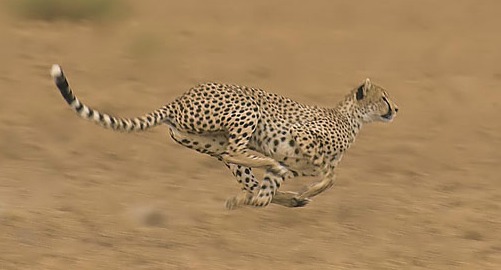
Stride |
Small collarbones and vertical shoulder blades help lengthen the stride. The cheetah spine is very flexible and works as a spring for the powerful back legs to give it additional reach and enable it to move 7 to 8 meters in a single stride. |
Eyesight |
The distinctive dark tear stripe from the inner corner of every eye enhances its visual acuity by minimizing the sun's glare. |
Lungs |
Rapid acceleration requires a cheetah to have quick air intake adaptations including enlarged nostrils. |
Cheetah chases will last for up to six hundred meters after which they have to give up the chase. They simply lack the stamina for longer chases.
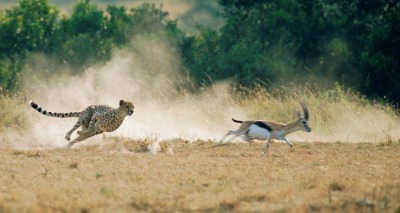 Cheetahs are successful in about two out of seven hunting attempts
What can a gazelle do to not becoming dinner?
A gazelle can turn sharply, and because of the cheetah's greater speed, it can dodge it a few times. If it manages to do these three or four times, the cat runs out of steam, and it can escape to fight another day.
Antelopes can easily outperform cheetahs when it comes to endurance.
The most common cause of failure in cheetah hunts is that the prey sees them before they charge.
A cheetah hunting its prey trips it with one or both forepaws.
When the prey is knocked off balance it gives them a chance to grab it by the throat.
It will then suffocate it with a clamping bite to the underside of the neck.
Cheetah diet
The favorite prey of a cheetah hunting for its food is smallish antelope.
This includes springbok, steenbok, impala, or the young of larger species.
Cheetah diet statistics
|
In the Kalahari |
Eighty-seven percent of their kills are springbok. |
|
Kruger National Park |
Forty-four percent impala, 13% common duiker and 13% steenbok. |
|
Etosha |
Ninety-seven percent of their diet is made up of springbok. |
They also eat smaller mammals such as hares, springhares, porcupines, and ground birds.
They do not usually scavenge.
Hunts for large antelope like yearling wildebeest, kudu, waterbuck, and gemsbok are successful only when a group of cheetahs operates together in a coalition.
Their teeth are too short for the killing bite used by other cats.
If there is cover nearby it will drag its kill, there to escape the notice of other carnivores and vultures.
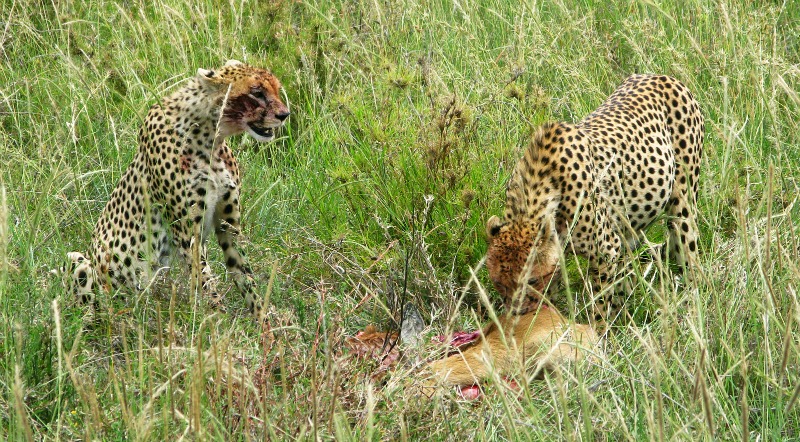 Cats like cheetahs are specialized carnivores that capture live prey
With its lightweight teeth and skull, this African animal has difficulty biting through the skin of even small antelope.
It usually starts feeding at the groin, where the skin is thin.
It eats the meat off one thigh, then the belly, the other thigh, and finally the forelegs.
They do not eat the skin and intestines of their prey and can chew up only small bones.
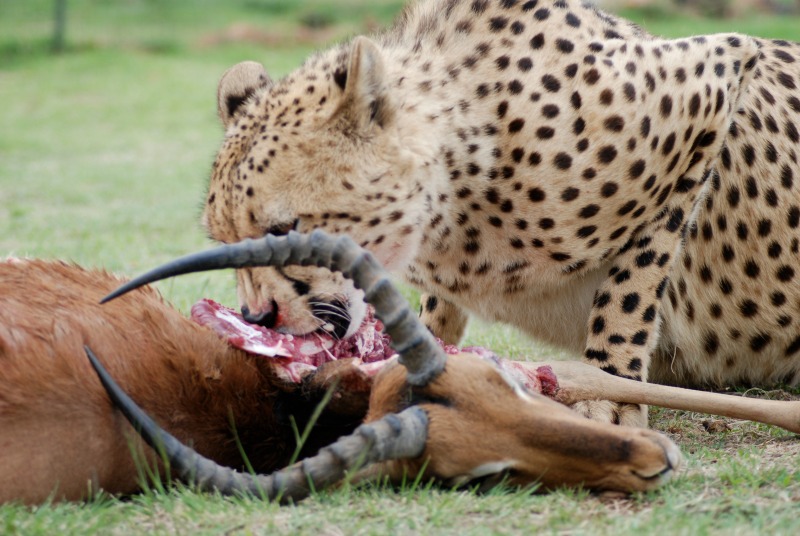 They are very dependent on a diet of meat
In Kruger National Park, cheetahs lose 14% of their kills to spotted hyenas. Spotted hyenas, leopards, and even warthogs also steal their kills.
Vultures are not only competitors but also attract the attention of lions and spotted hyenas.
They feed quickly before their kills can be stolen.
Their light builds and small teeth make them very vulnerable to attacks by other predators.
What sounds do cheetahs make?
They use high-pitched, bird-like chirrups as short-range greetings and contact calls.
They give a loud purr when content.
When threatened they give a loud, barking growl and snarl, often slapping the ground with their forepaws at the same time.
Cheetah life cycle phase 4
Life as an adult cheetah, finding a mate
Adult females are usually solitary, but their cubs stay with them for up
to 18 months.
The males often live in small, stable groups called coalitions.
Cheetah coalitions consist of brothers born in the same litter.
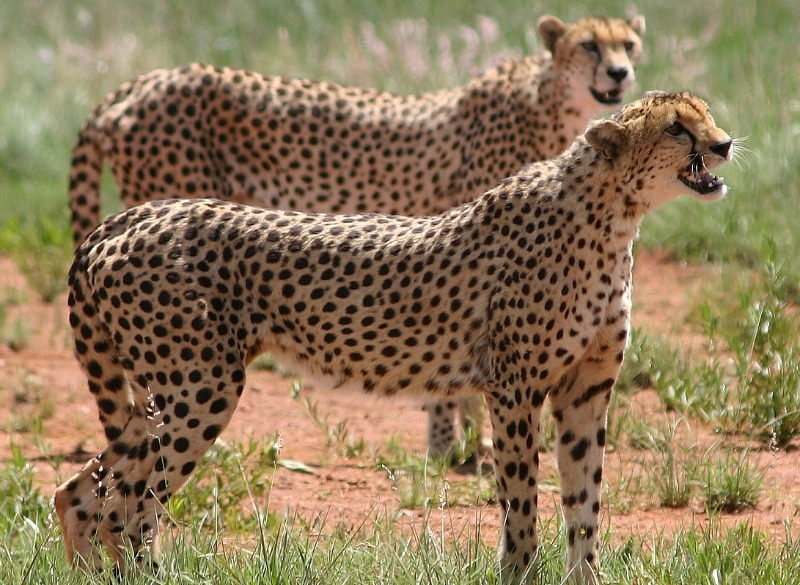
Serengeti cheetah males defend exclusive areas of between 39 and 78 square meters.
Most Serengeti adult males partner in coalitions. The statistics available show that 40% of coalitions are pairs and 19% in teams of three.
Most of these coalitions are brothers that have cooperated as a team after splitting up from their mother at the age of 17 to 23 months.
In such a coalition, one cheetah will usually be dominant and control most of the mating opportunities.
But not being the dominant male is at least better than being a single cheetah.
In the Serengeti only 4% of the single males ever win territories.
Another advantage of coalitions is their tendency to kill bigger animals than single hunters.
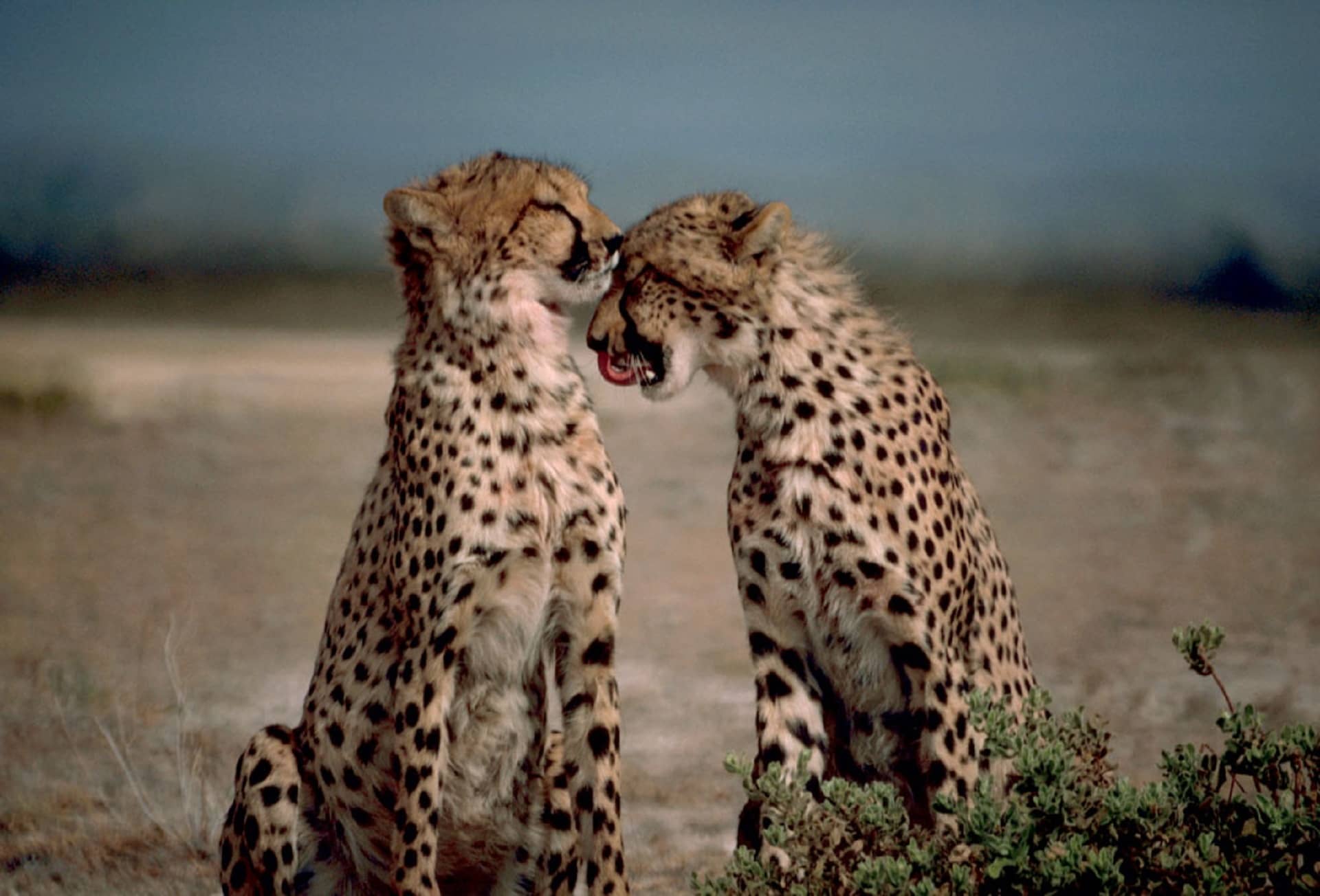
Cheetah on their own, have little hope of establishing a territory but in coalitions, they have a good chance of securing turf.
This small group will live and hunt together for life.
They will claim a large area, which may overlap several female territories.
Some males hold
territories for up to four to six years.
Cheetah territories are scent-marked with sprayed urine.
If the marks are more than a day or two old intruders ignore them and so some areas are used on a 'time-share' basis.
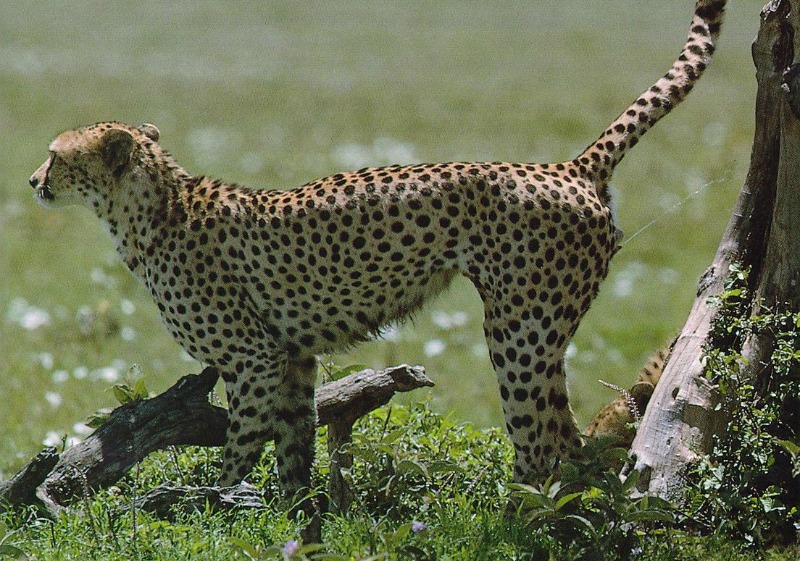 Cheetah scent-mark their territories with urine
Trespassers who get caught are savagely attacked and sometimes killed.
Large rocks and trees provide traditional marking sites.
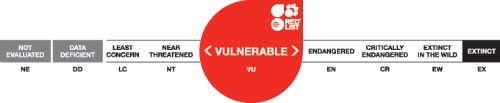 Cheetah conservation status
You might like these
The Mysterious Beauty of Leopards: Showing Their Secretive Way of Life
Leopard Beauty. Unravel the Mysteries of the Most Mysterious Big Cat. We investigate its unique adaptations, hunting skills, and territorial tendencies.
Investigating the intriguing universe of African Lions
Within Africa's wild savannahs, the African lion is a symbol of strength, power, and survival. This majestic being is a representation of bravery and strength.
Lion cubs - the ultimate lion cub fact guide.
Learn how lion cubs are raised within the pride, when they are ready to join the main hunts and why female lions carry their baby lions in their mouths


Please share your feedback, favorite cheetah facts and observations via the comments below.
Like this page?
Wildlife home
 |
Wildlife conservation
 |