African Wild Dogs
Understanding the Mysteries of One of the Continent's Most Fascinating Predators
An intriguing predator, the African wild dog, rules the untamed wilderness of Africa.
They are one of Africa's most interesting predators, with a striking coat of mottled fur, a slim physique, and sharp hunting abilities.
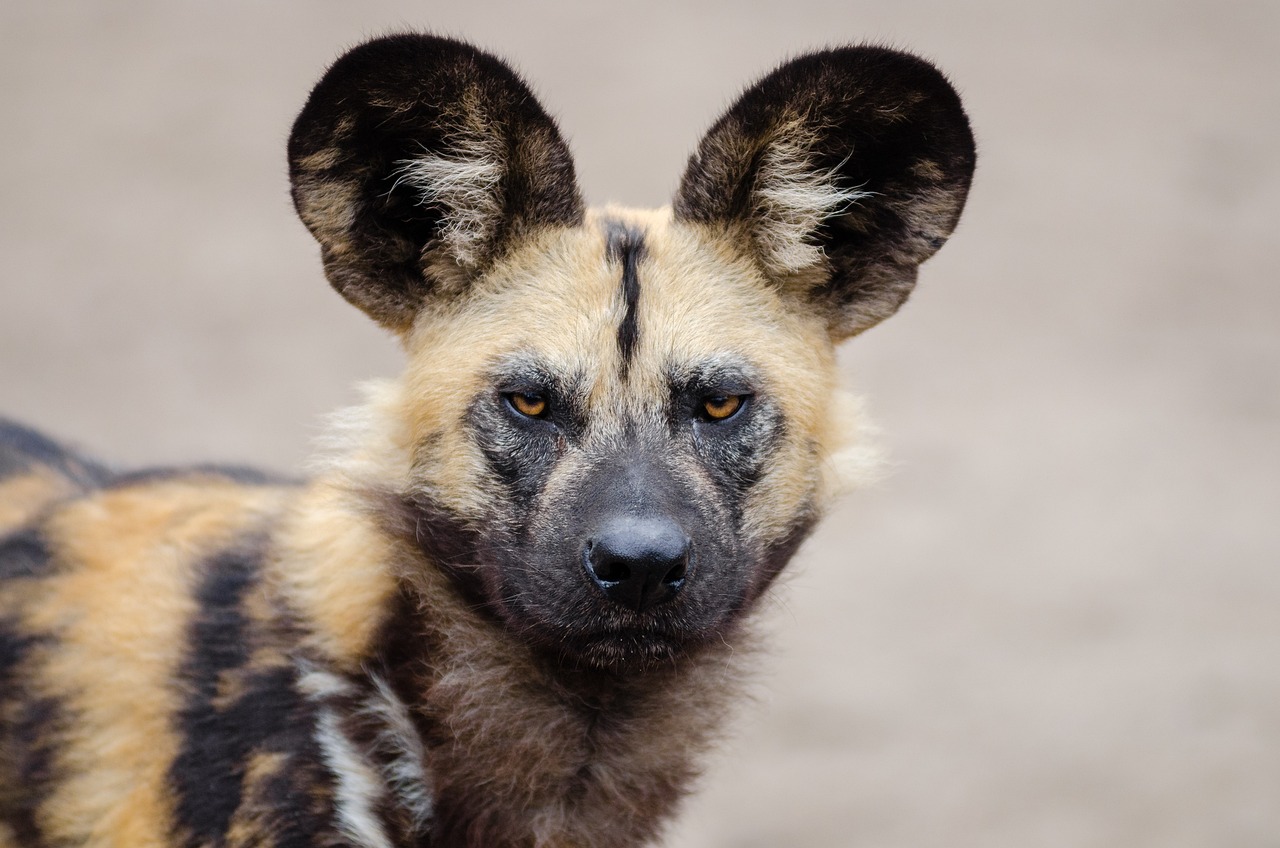
The African painted dog, also known as the African wild dog, is a highly intelligent and gregarious animal. It is acknowledged for its intricate pack dynamics and cooperative hunting skills.
These animals, who live in close-knit groups, have amazing capacities for cooperation, communication, and parental care.
We will examine their distinctive hunting strategies as we delve deeper into their behavior, including their extraordinary stamina and the key role of the pack.
In addition to their hunting techniques, we will also have a look at what habitat they prefer, how these African carnivores breed, and how they communicate with each other.
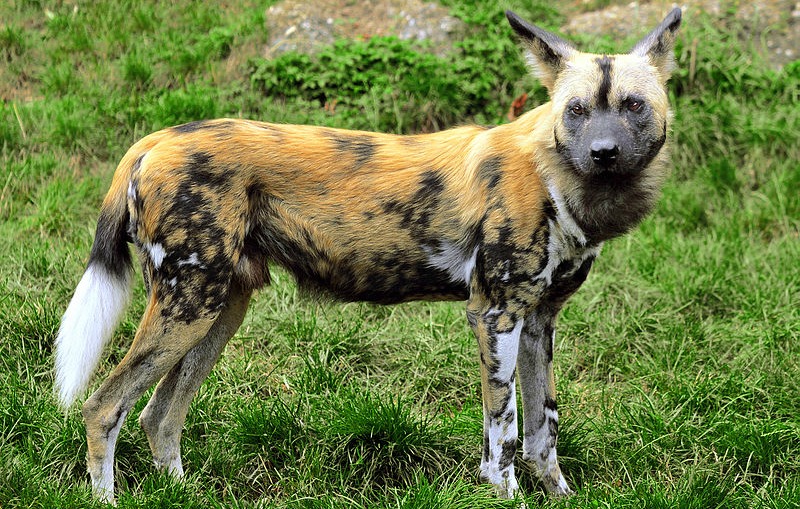 African Wild Dog
African wild dog physical features
|
Weight |
44-55 pounds (20—25 kilogram) |
|
Height |
24-30 inches (60-75 centimeters) |
|
Head |
The muzzle is heavy, with huge, rounded ears and dark eyes. |
|
Coat |
Blotched - black, white, and tan. This varies between individuals and across geographical areas. The tail has a white tip. |
|
Scientific name |
Lycaon pictus |
Are African wild dogs endangered?
Also called the hunting dog or the painted dog, these wildlife animals are currently disappearing
from Africa at an alarming rate. During the last century, these from 500,000 to only 6,500 today.
Where do these dogs live?
They used to live in the Northern and Southern Savanna.
Sadly, persecution, disease, and depletion of their habitats have caused a frightening decline in their numbers, raising fears that one of Africa's most fascinating animals could soon become extinct.
Sub-Saharan Africa is home to African wild dogs. This is the African region south of the Sahara Desert.
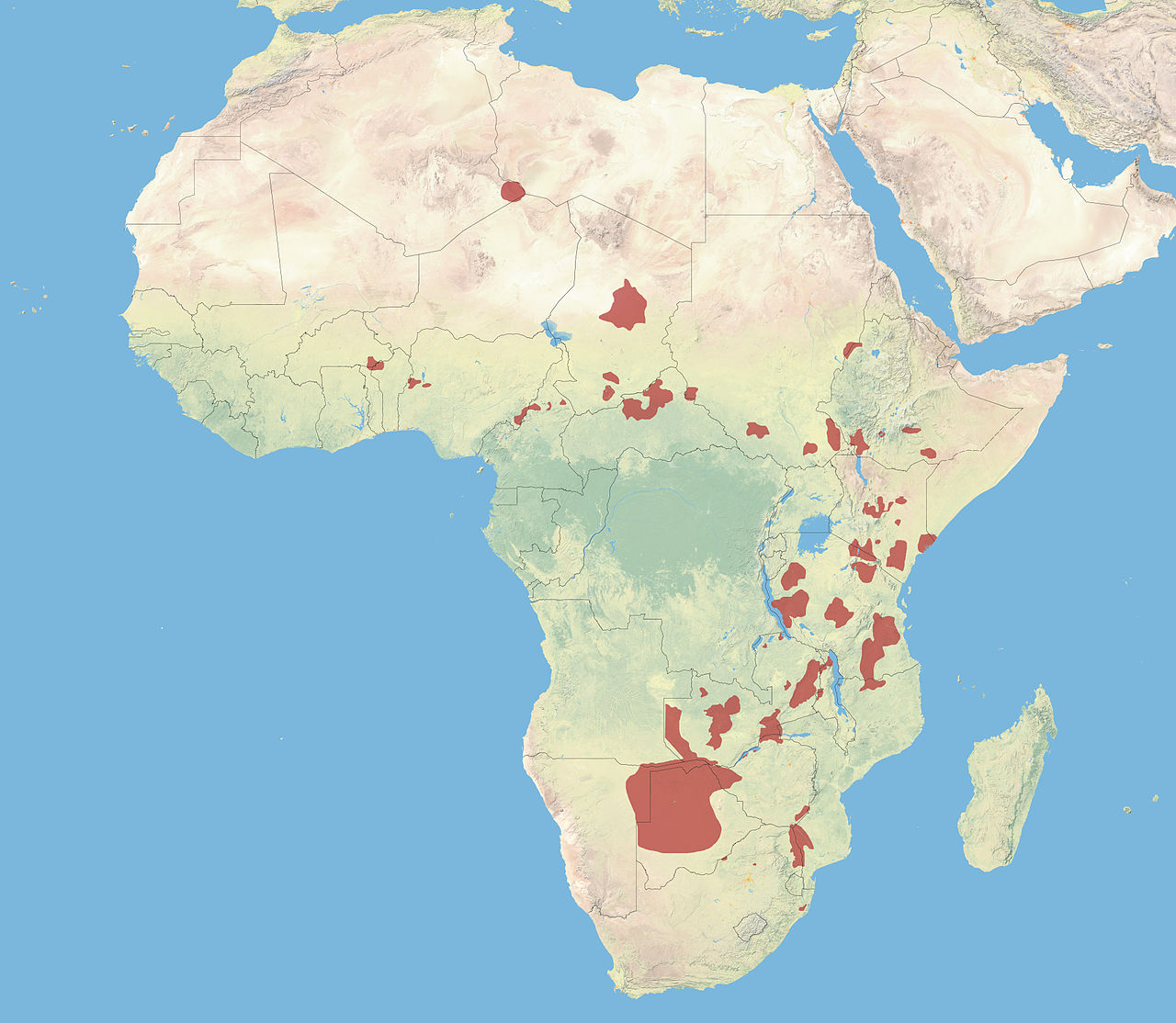 Creative Commons: Wikimedia
Currently, the biggest populations can be found in Southern Africa, Tanzania and northern Mozambique.
Many names for Lycaon pictus
African Wild Dog, African Hunting Dog, Cape Hunting Dog, Painted Hunting Dog, Painted Wolf, and Painted Dog. We will therefore use these names interchangeably.
African wild dog habitat
Painted wolves are active during the day because they hunt by sight, although they sometimes take advantage of bright moonlight to hunt at night.
Like most African animals they tend to rest in the shade during the hottest part of the day.
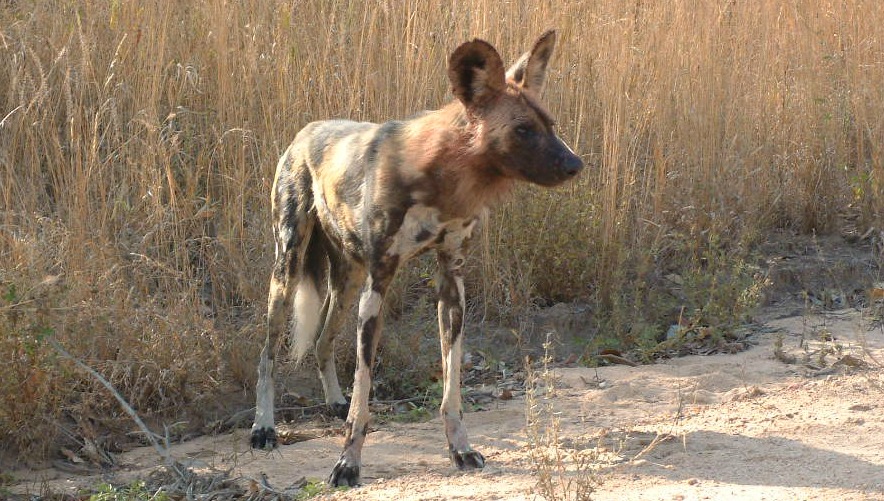
The habitat that these painted dogs prefer will be open grasslands, woodlands, and bushveld.
These African carnivores require vast ranges to roam.
For this reason, it is only the largest of protected areas, like Kruger National Park or Hwange National Park that can maintain viable populations in the long term.
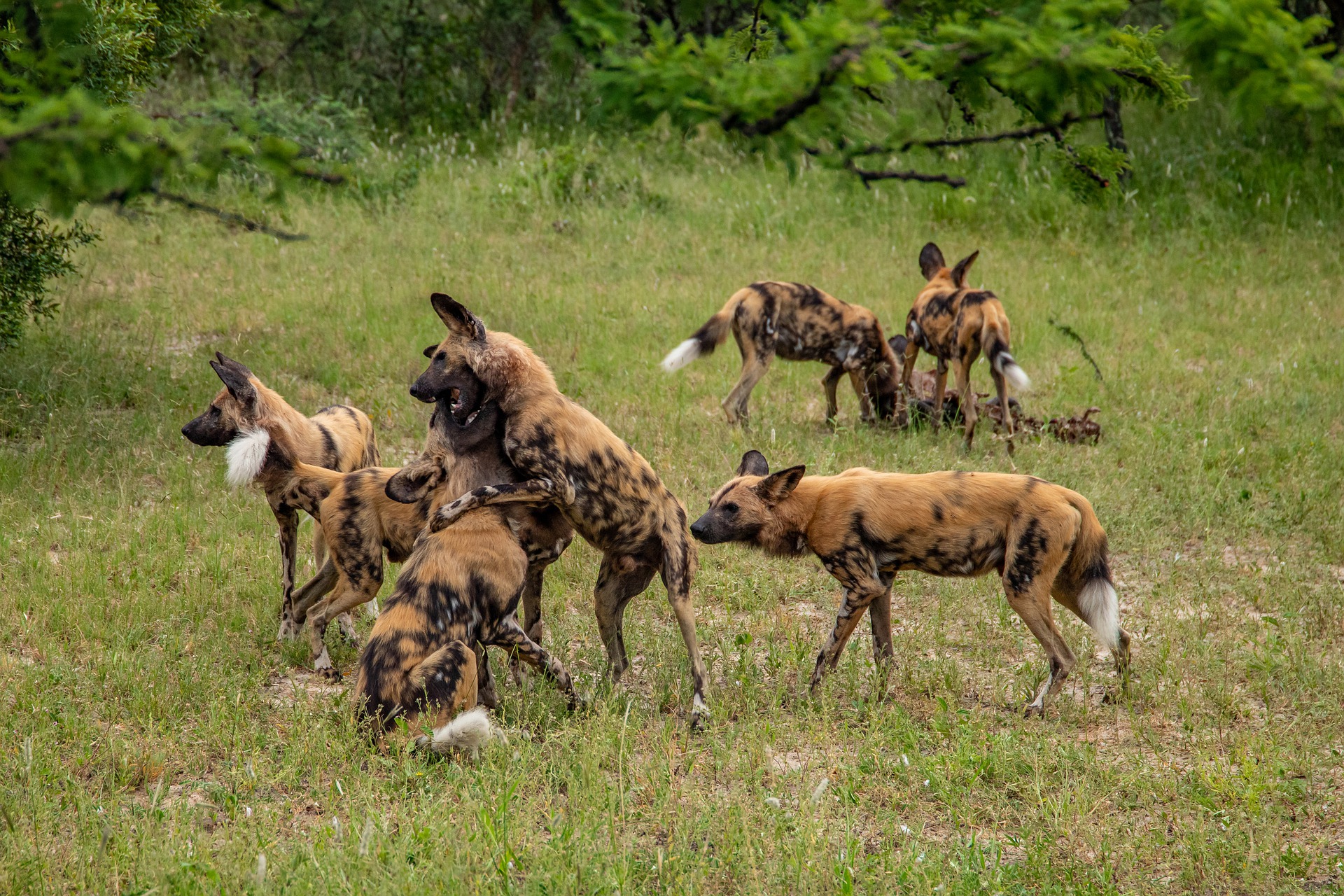 Pack of African wild dogs
Their need for huge areas is just one of the factors that make them one of the most endangered species in Africa.
Painted dog pack structure
Typically, only one pair in the pack breeds.
Very rarely will a second female give birth and if this happens the dominant female may kidnap and raise her young.
In extreme cases, she will even kill these pups.
This is done to maintain an optimum pack size.
Litter sizes average around ten pups.
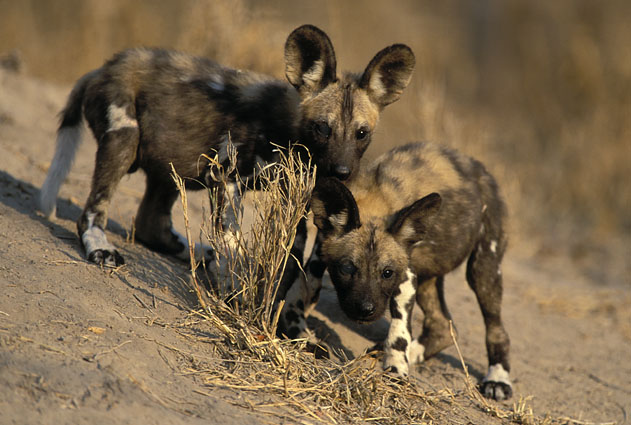 These cute African wild dog puppies begin to wean at two weeks of age
Cape hunting dog mothers have their pups in underground holes like old aardvark diggings.
Males will stay in the pack and help raise subsequent litters.
The females leave the pack to seek out other breeding opportunities, as soon as the pups are grown-ups. The males stay behind to form the core of the pack.
The pups begin to wean at only two weeks of age.
The whole pack Providing food for them will contribute to raising them if the mother should die.
How does the pack communicate with each other?
Intense social interactions, mostly involving sniffing and muzzle licking bond African wild dog packs.
When they are excited, such as before a hunt or just after a kill they will give a high-pitched "twitter".
These African animals have an extraordinarily strong body odor.
Dogs separated from the pack tracked their way back to it by smell.
Their long-range contact call is a musical "hoooo" that carries for 2 to 3 km.
They also whine when begging, and their alarm call is a deep bark.
Urine Scent marks are used to show that an area is occupied.
The dominant female will also scent mark to advertise that she is sexually receptive.
The dominant male immediately urinates on top of her scent marks, to deter competitors.
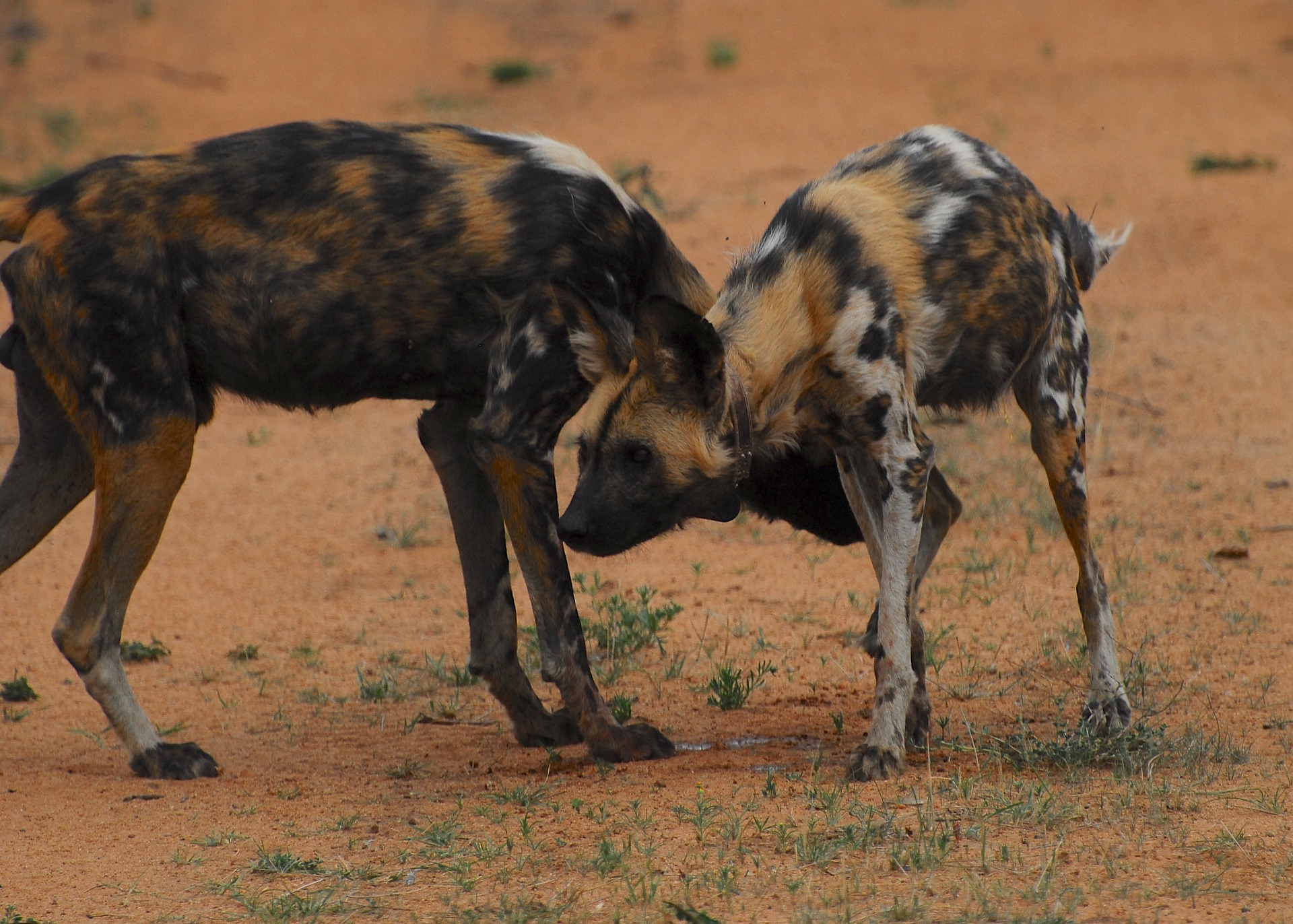
They also communicate through body posture and tail position.
Tail tucked between the leg's signals of fear and submissiveness.
A friendly dog has an upright posture, and it curls its tail up over its back.
An aggressive dog will be rigidly upright.
Adults, as well as pups, play.
How do they hunt prey?
Wild dogs hunt mostly by sight and during the day.
They rely on their phenomenal stamina to tire their prey and the combined strength of the pack to bring the prey down.
Often, they do not attempt concealment and approach potential prey openly
at a slow trot.
You will notice how they keep their heads low and their ears back.
They will break into a run only when the prey flees.
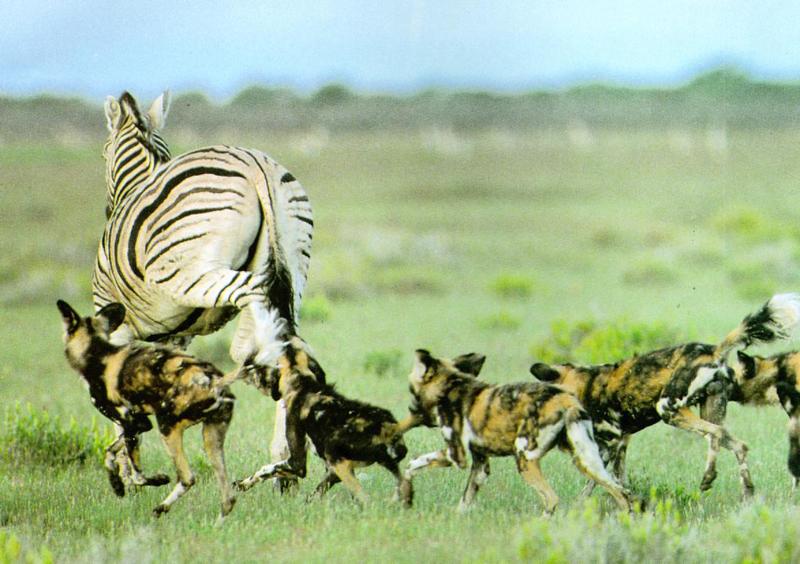 African wild dogs are known to hunt across great distances with high energy expenditure.
They may rush a herd into flight and then stand to watch to identify potential members of the herd that is slower than the rest.
The leading dog, which is usually the dominant male or female, will select a particular target and pursues it in a very single-minded manner.
The rest of the pack will follow in lines behind the leader.
Often one of the other dogs chooses a different prey and so lead some of the dogs on another chase.
In this case, the pack splits up and multiple kills may be made.
As soon as the dog catches up with the prey it will pull it down if
it is small enough.
In the case of larger prey, it will run alongside and slash at its rump to slow it down until more dogs catch up.
The dogs then bite chunks out of the prey and disembowel it.
The prey then dies of shock and loss of blood.
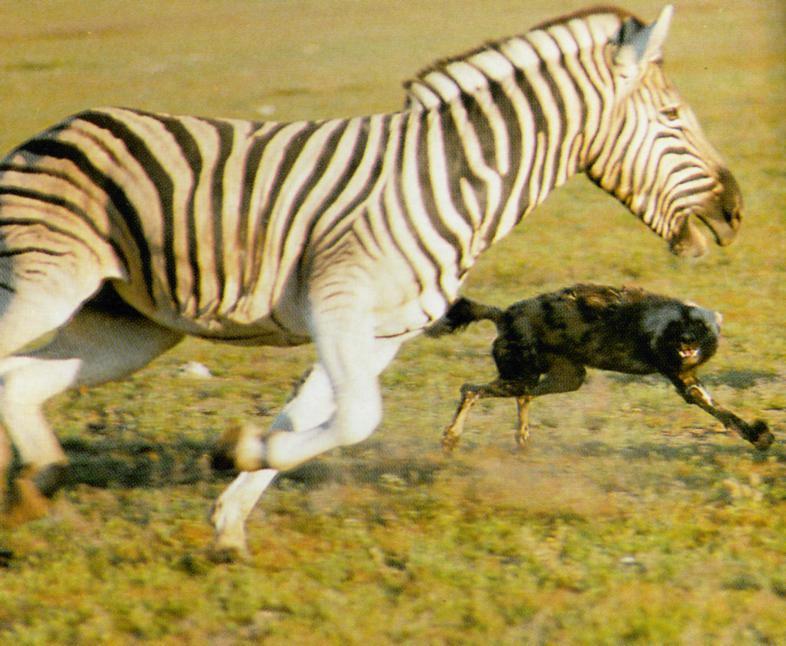
Wild dogs can reach speeds of sixty kilometers per hour during the chase.
This is too slow to catch a medium-sized antelope during a short sprint chase.
Instead, they depend on their stamina in long pursuits to wear down the prey.
Most chases cover 3-5 km of pursuits to wear down the prey.
Hyaenas are 'kleptoparasites' that steal food from wild dogs. Hunting is an energy-intensive activity; even a minor loss of food to kleptoparasites has a significant impact on the duration of time dogs need to hunt to attain energy balance.
African wild dogs play a key role in eliminating sick and weak animals among their target prey species.
They are specialized hunters of medium-sized antelope in the 15–50-kilogram range like springbok, and impala.
They will also take animals such as small hares and occasionally warthogs and foxes.
They very rarely scavenge.
Statistics indicate that kills in the Kruger National Park consist of 8% Kudu, 75% impala and 15% smaller antelope.
In Southern Africa, they do not hunt adult wildebeest and zebra.
How successful are African wild dogs in their hunting efforts?
Statistics indicate that the prey has only ten to thirty percent chances of escaping from their hunting expeditions.
This compares to a six to eight in ten chance of evading an attack by lions or hyenas.
In Hwange National Park their diet consists of 54% impala and 23% kudu.
What do we know about their feeding habits?
They sometimes face intense competition from spotted hyenas that will team up with one another to push the dogs aside.
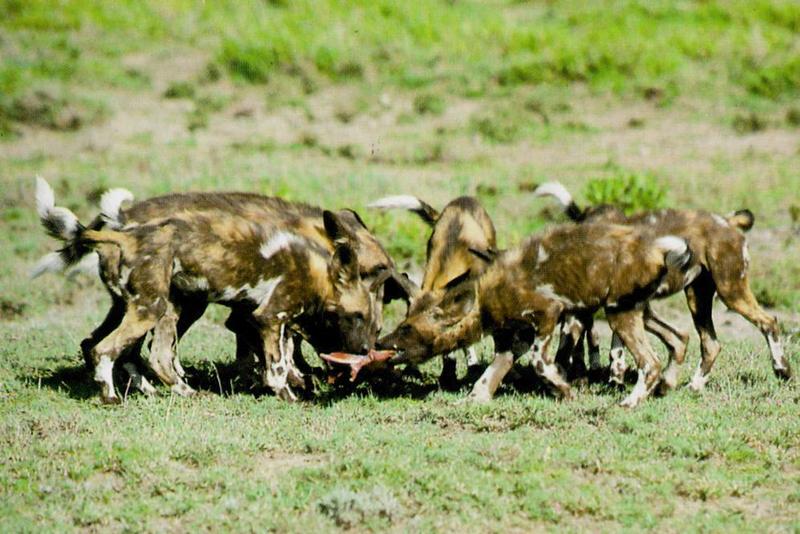 Speed is very important when African wild dogs feed to avoid the kill being stolen
This makes speed especially important when they feed to avoid the kill being stolen.
A pack of wild dogs is normally able to keep hyenas at bay because some of the dogs concentrate on guard duty while the others feed.
Wild dogs have specially adapted teeth to consume a meal in the quickest possible time. These teeth allow them to shred the carcass of prey rapidly because as smaller African animal they always face the risk of having their meals stolen by other, bigger predators.
The larger the pack of
dogs, the better their chances of keeping spotted hyenas at bay.
They do not fight with each other like lions and hyenas do during feeding. They can eat 100 kilograms of meat from an adult kudu in 15 minutes.
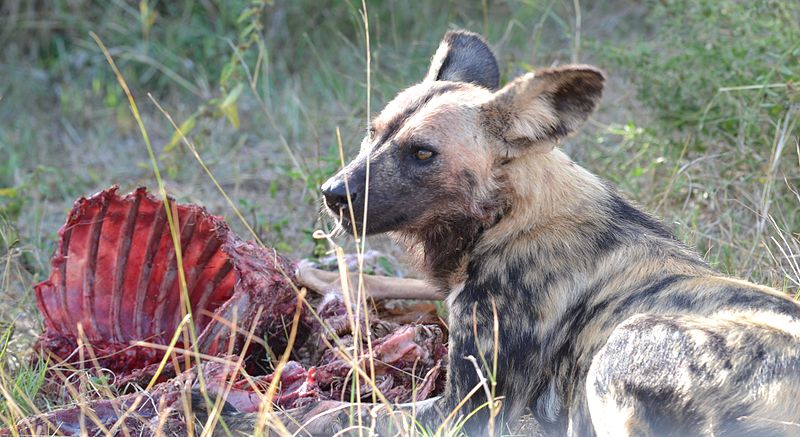 Wild dogs have specially adapted teeth to consume a meal in the quickest possible time.
An especially important part of wild dog hunting and feeding behavior is the division of the spoils after a successful hunt.
Some dogs do not participate in the hunt because they remain behind at the den to guard puppies.
When the pack returns from the hunt, these dogs will beg for food from other members.
It does this by grinning, nudging, and nibbling their lips, licking their faces, lowering its forequarters, and raising its tail.
Puppies will usually be fed first. Sick and injured African wild dogs also receive a share of meat for as long as they remain with the pack.
African wild dog pack structure
These African animals live in packs that can consist of anything from two to over fifty dogs.
Most packs have about 12 to 20 adult members.
A dominant male and female known as the alpha pair will head the pack.
This pair will in most cases, account for all the breeding activity.
All pack members will help raise the pups.
The rest of the pack will consist of the offspring of the current or previous alpha pair.
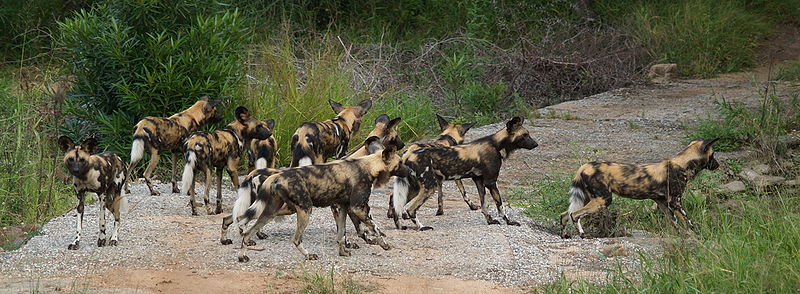 Wild dogs are very social animals living in a tightly knit pack
Wild dogs are unusual in that it is the females who leave their birth pack at 14–30 months of age and join other packs that lack sexually mature females.
The males remain in their pack to become helpers.
This is unusual because the opposite is usually true with social mammals, where a group of related females usually forms the core of the social group.
Below the alpha pair, there is no definite hierarchy.
Submissiveness, not aggression, is the deciding factor during wild social interactions.
A typical example of this is displayed when a dog wants a piece of meat after a hunt.
The dog will beg for some meat with head and forequarters flat to the ground, hindquarters raised, ears flattened to its head, and lips drawn back.
Painted dog conservation
Our African wild dogs are seriously endangered now. The main reasons for this are habitat loss causing the fact that we have fewer than 6,600 wild dogs in the wild.
Their conflict with human activities as well as infectious diseases worsens this problem.
Current conservation efforts aim to promote cape hunting dog populations through the reintroduction of these African animals into several fenced reserves.
In cases where farmers acknowledged the potential ecotourism value of wild dogs, their attitudes were more positive.
Promoting the coexistence between people and predators like the African hunting dogs will require:
- working with local farmers to limit persecution
- stopping snaring and,
- minimizing contact between African wild dogs and domestic dogs.
Conclusion
This was a quick visit to the fascinating world of African wild dogs.
In this world, pack life, remarkable hunting abilities, and collaboration combine to form one of the most fascinating species in Africa.
Please share your feedback, favorite African wild dog facts, and observations via the comments below.
Like this page?
Wildlife home
 |
Wildlife conservation
 |