Battling Rhino Poaching to Protect the Last Giants and Preserve Our Natural Heritage
"In the dead of night, a poacher’s rifle shatters the silence. A rhino collapses—another victim in the brutal trade for its horn. But conservationists are fighting back. Will we let these ancient creatures vanish forever?"
Rhino poaching remains one of Africa’s most urgent wildlife crises.
South Africa—home to roughly 70% of the world’s remaining rhinos—is the epicenter of this battle. Understanding the scale, causes, and brutality of rhino poaching is essential if we hope to protect these magnificent animals from extinction.
The Brutal Reality of Rhino Poaching
Rhino horns are among the most valuable illegal wildlife products on Earth. On the black market, prices can reach $30,000–$65,000 per kilogram, making rhino horn more valuable than gold, heroin, or cocaine. This extreme value fuels a sophisticated criminal industry that spans Africa and Asia.
Some images associated with rhino poaching are graphic and disturbing—a stark reminder of what these animals endure.
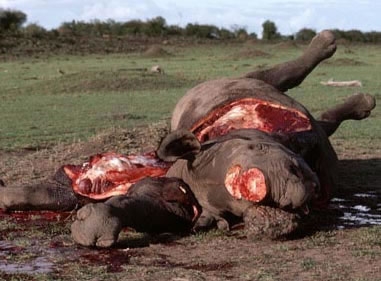
Rhino horns are quite lucrative on the underground market.
Prices in Vietnam range from $30,000 to $65,000 per kg (more than gold, heroin, or cocaine), making it a profitable underground enterprise.
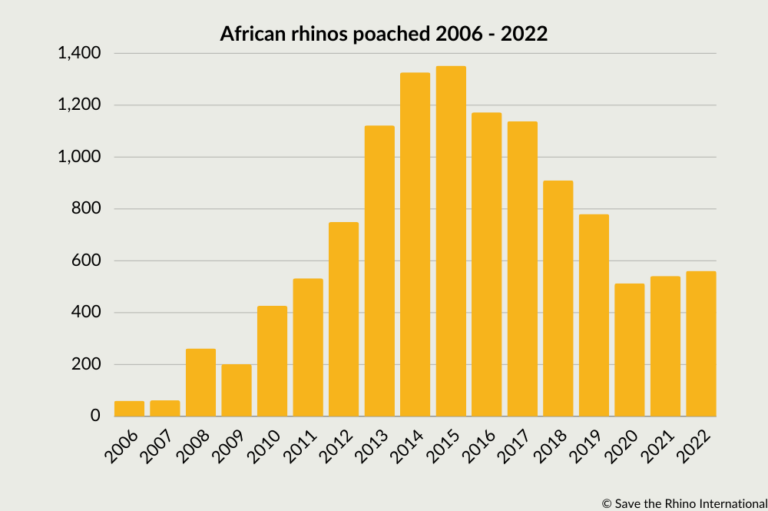
Some good news: Rhino poaching in South Africa fell by 16% in 2025, marking the lowest national total in a decade.
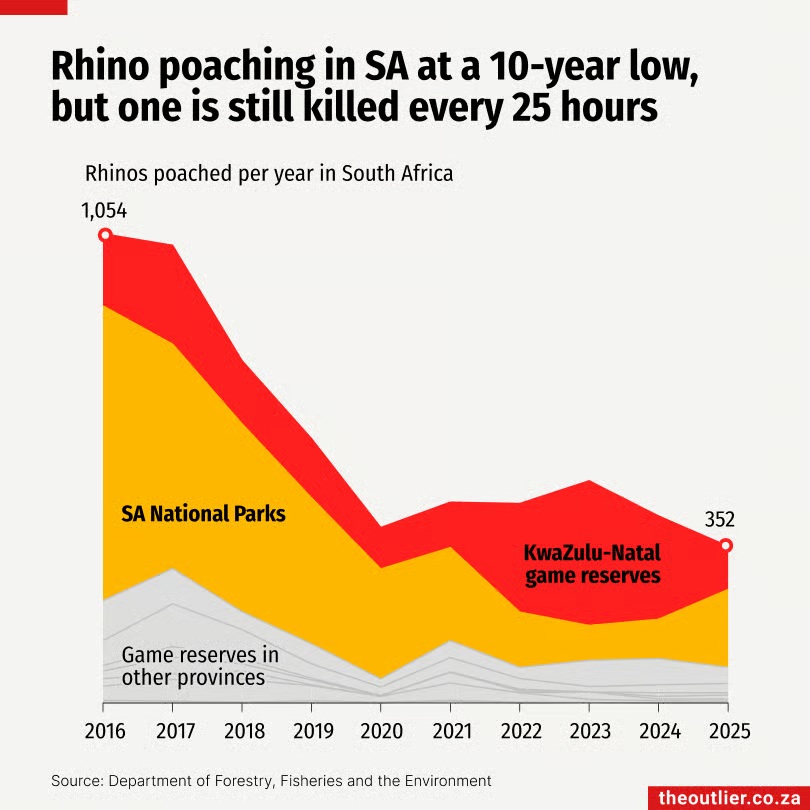
South Africa recorded 352 rhinos poached in 2025, a 16% decrease from 420 in 2024.
This marks the second consecutive year of national decline, signaling that layered anti‑poaching and anti‑trafficking strategies are gaining traction.
Key drivers behind the decline include:
- Enhanced detection systems using advanced cameras and sensors
- Faster, more coordinated anti‑poaching responses
- Integrity and accountability measures within ranger forces
- Stronger, centralised prosecution of organised crime networks
Facts about rhino poaching: Why the hell people pay $300,000 for rhino horn.
Generally,because off some ridiculous myths.
During the days of colonialism, exploiting the natural resources of Africa was the leading cause of rhino deaths in the form of unconstrained hunting.
Rhino hunting was considered a leisure activity. The rhino horn was kept as a trophy.
However, during the last few years, rhino horns have been used as a symbol of wealth.
Today, rhino horn powder is seen as a cocaine-like party drug in Vietnam.
Why Rhino Horn Is So Valuable
Demand for rhino horn is driven primarily by Vietnam and China, where horn is used for:
- Traditional medicine (despite no scientific evidence)
- Status symbols and luxury gifts
- Party drugs (rhino horn powder marketed like cocaine)
- Wealth displays among elites
A widely circulated—and false—story in Vietnam claimed rhino horn cured a politician’s cancer. This myth triggered a surge in demand, pushing prices above $60,000 per kilogram.
Why Rhinos Are Easy Targets
Rhinos have poor eyesight, making them vulnerable to poachers who can approach within meters undetected. Although they rely on strong hearing and smell, experienced poachers exploit this weakness.
Two main groups of poachers operate:
1. Subsistence Poachers
Driven by poverty and hunger, they:
- Hunt on foot
- Fire multiple random shots to immobilize the rhino
- Hack off horns with axes
- Sell horns to syndicates for minimal reward
2. Professional Poachers
Highly trained and well‑equipped, often with:
Military backgrounds
Inside information about targeted reserves
Access to helicopters, tranquilizer darts, and veterinary drugs
Chainsaws for rapid horn removal
These operations are fast, coordinated, and devastatingly efficient.
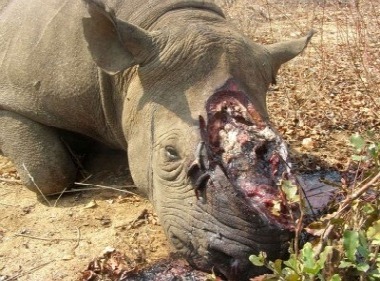
High‑Tech Poaching: Helicopters, Darts, and Chainsaws
Professional poachers often mimic legitimate wildlife‑management techniques:
- Rhinos are darted from helicopters using veterinary drugs.
- Horns are removed with chainsaws—sometimes while the animal is still alive.
- Registration numbers on aircraft are often covered or falsified.
- Rhinos may die from overdose, blood loss, or shock.
If the tranquilizer dose is too low, the rhino may regain consciousness during the mutilation—one of the most horrific outcomes of poaching.
The Role of Insiders and Corruption
Evidence increasingly links poaching syndicates to wildlife industry insiders, including:
- Game ranchers
- Safari operators
- Professional hunters
- Veterinarians
These individuals have access to:
- Firearms
- Permits
- Transport
- Veterinary drugs
- Knowledge of rhino locations
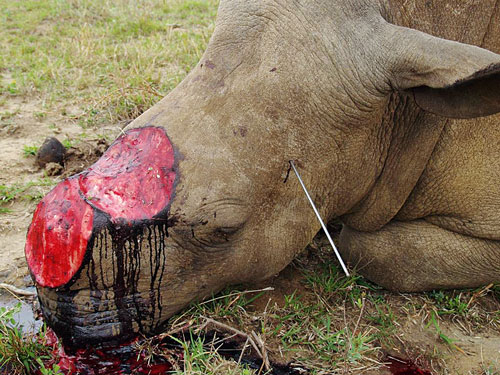
This insider involvement makes poaching harder to detect and dismantle.
Poaching professionals
Many of the poachers seem to have had military training.
They will normally have prior access to information about the farm they intend to target.
The high-tech aerial attack will be done by darting the animal from the air with tranquilizer guns.
This will
takes less than seven minutes to bring down the animal.
Vets involved?
The fact that highly controlled and regulated veterinary drugs are used in certain cases of rhino poaching indicates the involvement of professional veterinarians.
When they land the helicopter, they hack off the horns with a chainsaw.
The use of a helicopter allows for easy access and quick getaways.
Several media reports have indicated that the registration numbers on the tail of the aircraft get covered up or falsified during the operation.
The rhino subsequently dies either from an overdose of tranquilizer or bleeds to death.
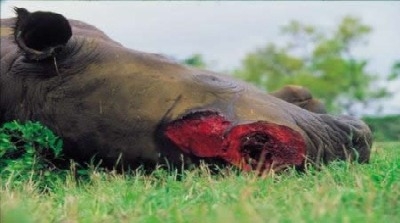
One troubling fact is that the methods being used by the syndicates often reflect those used by wildlife capture operators in professional rhino management operations.
The rhinos are normally darted with a dosage of lethal drugs that may result in a quick death, although some evidence shows that the animal suffered great stress before death.
If the drug dosage had been too low to kill the rhino the animal is likely to wake during the brutal removal of the horns with a chainsaw.
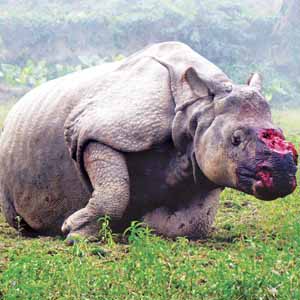 Poachers use chainsaws to rip rhinos' horns off often leaving the rhino are still alive.
The severely maimed rhino will then attempt to breathe through a cavity in its nasal passage between its eyes.
This rhino will have no sense of smell and if it survives will have a great battle to fight off any secondary infection.
Wildlife industry insiders' part of the problem?
Increasing evidence links South Africa's rhino poaching with wildlife industry insiders.
These individuals are obviously in a great position to run wildlife crime syndicates and are typically also well funded and connected within the industry.
There are also rumors that rhino poaching syndicates are penetrating the hunting industry.
The hunting industry has access to guns, permits, vehicles and charter aircraft making them a target for rhino poaching syndicates.
These rumors seem to have merit because of the increasing number of arrests of -
- game ranchers,
- safari operators
and
- professional hunters.
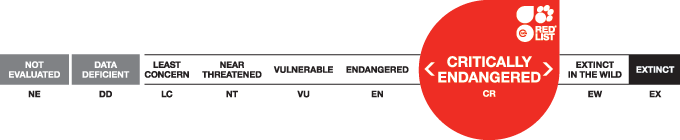
Conservation Status: How Close Are Rhinos to Extinction?
How to stop rhino poaching?
There is no single solution, but several strategies are essential:
- Demand reduction through education in consumer countries
- Stronger law enforcement and anti‑poaching units
- DNA profiling of all horns
- Better intelligence sharing across borders
- Community empowerment to reduce reliance on poaching income
- Funding for rhino protection and reserve security
The scale of the challenge is overwhelming — but giving up is not an option.
This is not how our generation should see our lovely African animals:
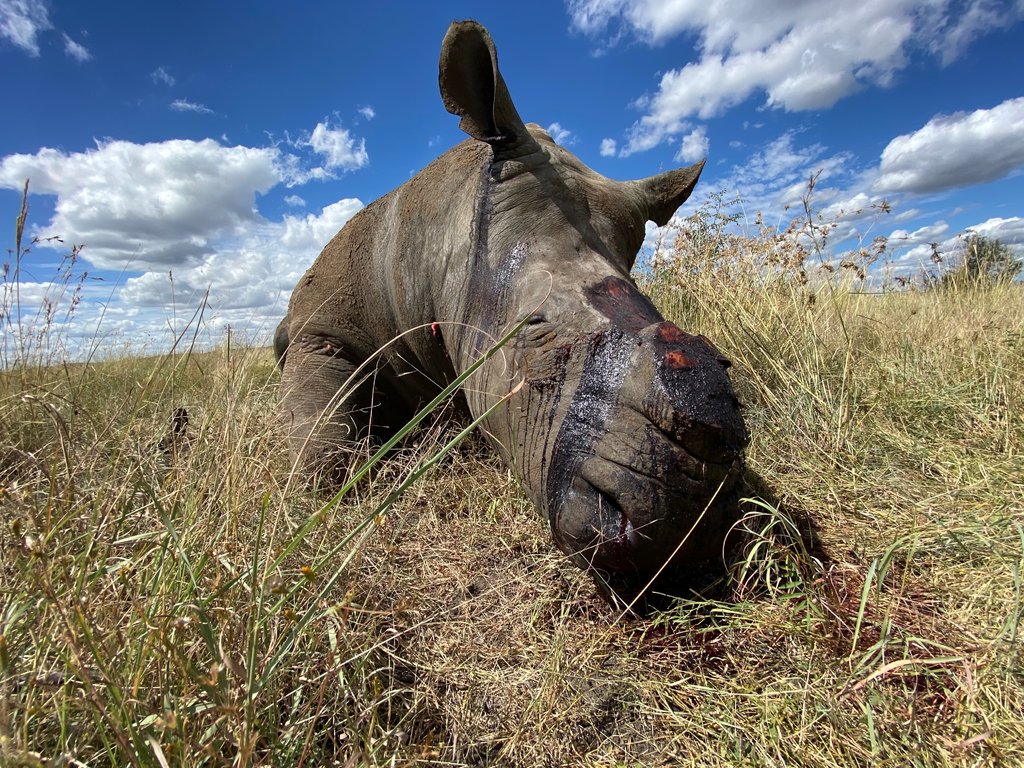 Image credit: Nico Jacobs
Funds are seriously needed to secure the safety of rhinos.
Financial support will contribute towards critically required for rhino protection projects in Africa.
The Cost of Human Greed
Rhinos are being slaughtered for a product with no medicinal value. The cruelty inflicted on these animals is unimaginable, and their future hangs in the balance.
Rhinos have survived for millions of years. The question now is:
Will they survive us?
Like this page?
Looking for a solution to rhino poaching
We discuss our thinking about the solutions to rhino poaching here.
Wildlife home
 |
Wildlife conservation
 |